read the excerpt from act 3 of a dolls house. helmer: do you know, you ought to embroider. mrs. linde…
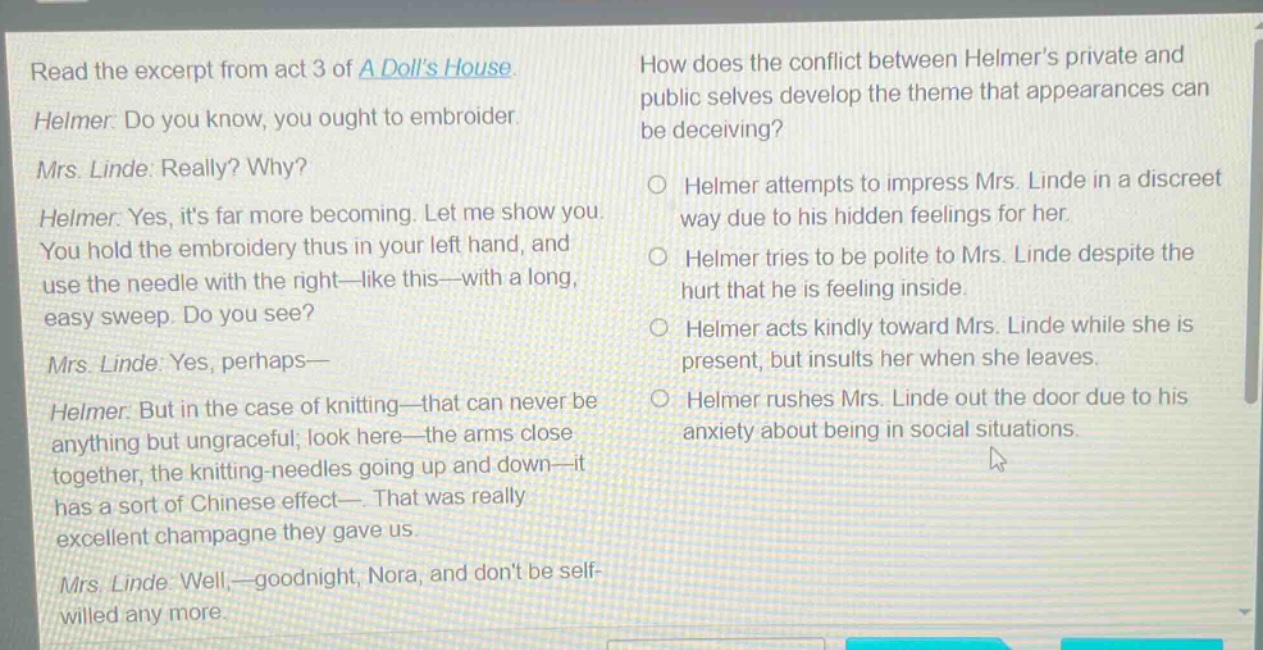
read the excerpt from act 3 of a dolls house. helmer: do you know, you ought to embroider. mrs. linde: really? why? helmer: yes, its far more becoming. let me show you. you hold the embroidery thus in your left hand, and use the needle with the right—like this—with a long, easy sweep. do you see? mrs. linde: yes, perhaps— helmer: but in the case of knitting—that can never be anything but ungraceful; look here—the arms close together, the knitting - needles going up and down—it has a sort of chinese effect—. that was really excellent champagne they gave us. mrs. linde: well,—goodnight, nora, and dont be self - willed any more. how does the conflict between helmers private and public selves develop the theme that appearances can be deceiving? helmer attempts to impress mrs. linde in a discreet way due to his hidden feelings for her. helmer tries to be polite to mrs. linde despite the hurt that he is feeling inside. helmer acts kindly toward mrs. linde while she is present, but insults her when she leaves. helmer rushes mrs. linde out the door due to his anxiety about being in social situations.
Answer
Brief Explanations:
Helmer's kind - behavior in front of Mrs. Linde and possible contrasting behavior when she's not present shows how appearances can be deceiving. He presents a certain public self while potentially having a different private self.
Answer:
Helmer acts kindly toward Mrs. Linde while she is present, but insults her when she leaves.