read the excerpt from act 2 of a dolls house. mrs. linde: listen to me, nora. you are still very like a…
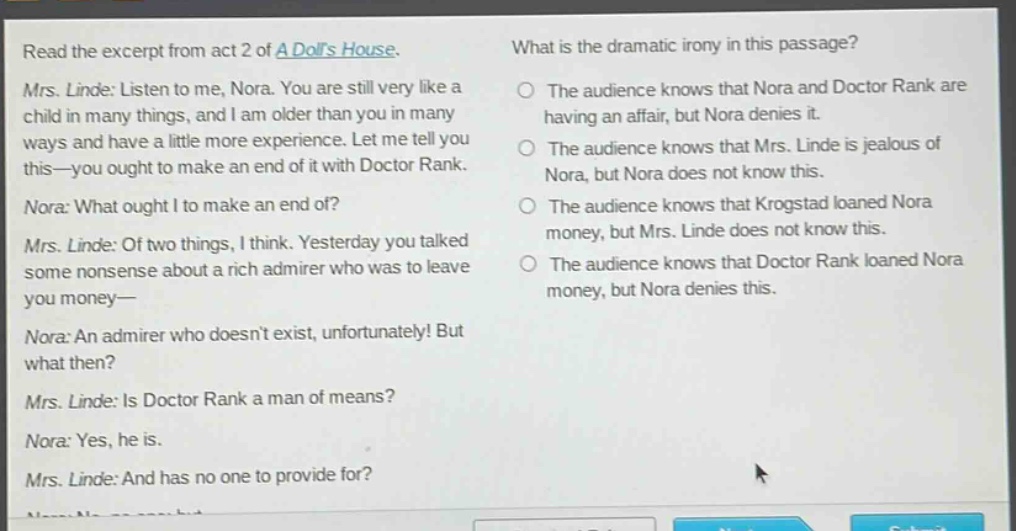
read the excerpt from act 2 of a dolls house. mrs. linde: listen to me, nora. you are still very like a child in many things, and i am older than you in many ways and have a little more experience. let me tell you this—you ought to make an end of it with doctor rank. nora: what ought i to make an end of? mrs. linde: of two things, i think. yesterday you talked some nonsense about a rich admirer who was to leave you money— nora: an admirer who doesnt exist, unfortunately! but what then? mrs. linde: is doctor rank a man of means? nora: yes, he is. mrs. linde: and has no one to provide for? what is the dramatic irony in this passage? the audience knows that nora and doctor rank are having an affair, but nora denies it. the audience knows that mrs. linde is jealous of nora, but nora does not know this. the audience knows that krogstad loaned nora money, but mrs. linde does not know this. the audience knows that doctor rank loaned nora money, but nora denies this.
Answer
Brief Explanations:
Dramatic irony occurs when the audience knows something that the characters do not. In this passage from A Doll's House, the audience is aware that Krogstad loaned Nora money, while Mrs. Linde does not know this fact.
Answer:
The audience knows that Krogstad loaned Nora money, but Mrs. Linde does not know this.