read the excerpt from act 3 of a dolls house. mrs. linde looking at her watch: not yet—and the time is…
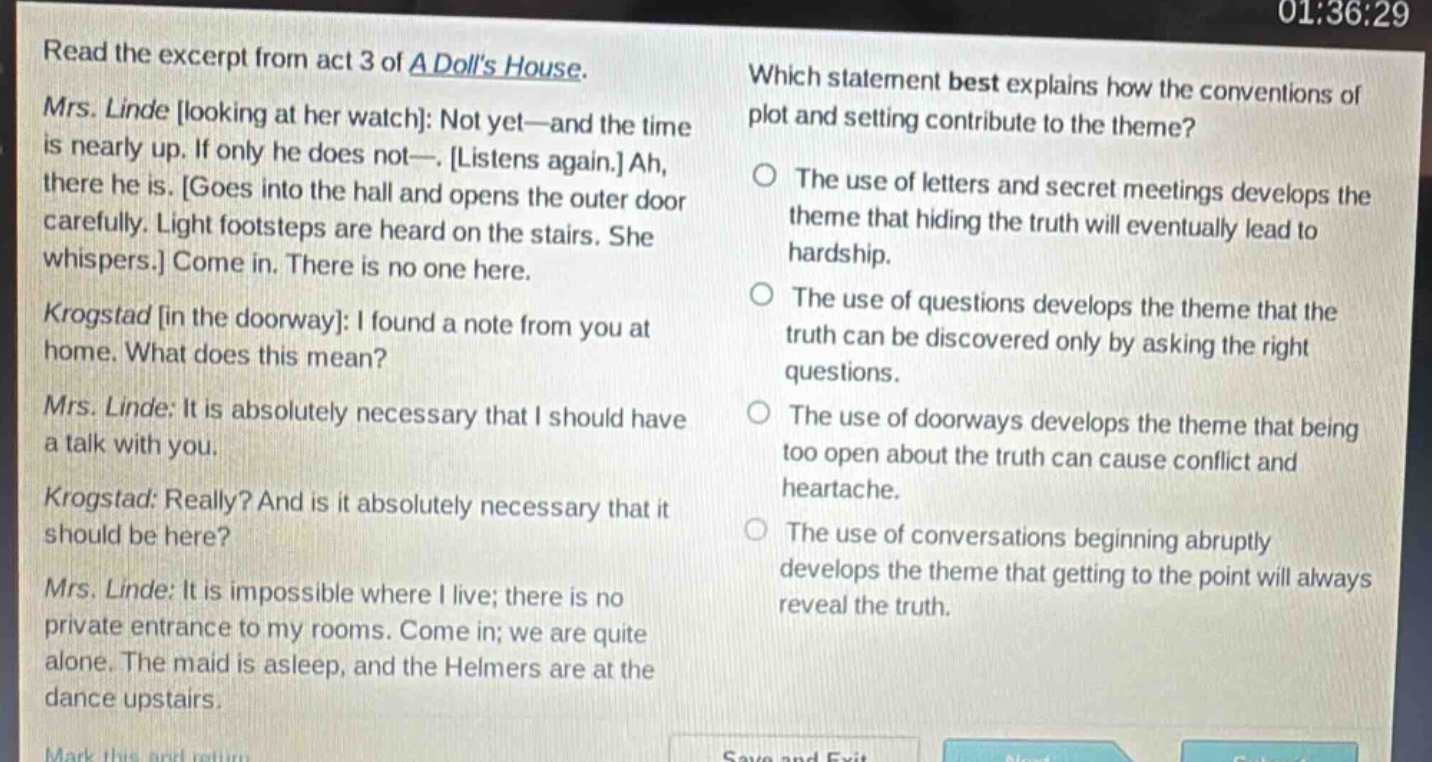
read the excerpt from act 3 of a dolls house. mrs. linde looking at her watch: not yet—and the time is nearly up. if only he does not—. listens again. ah, there he is. goes into the hall and opens the outer door carefully. light footsteps are heard on the stairs. she whispers. come in. there is no one here. krogstad in the doorway: i found a note from you at home. what does this mean? mrs. linde: it is absolutely necessary that i should have a talk with you. krogstad: really? and is it absolutely necessary that it should be here? mrs. linde: it is impossible where i live; there is no private entrance to my rooms. come in; we are quite alone. the maid is asleep, and the helmers are at the dance upstairs. which statement best explains how the conventions of plot and setting contribute to the theme? the use of letters and secret meetings develops the theme that hiding the truth will eventually lead to hardship. the use of questions develops the theme that the truth can be discovered only by asking the right questions. the use of doorways develops the theme that being too open about the truth can cause conflict and heartache. the use of conversations beginning abruptly develops the theme that getting to the point will always reveal the truth.
Answer
Brief Explanations:
In the excerpt, letters and secret - meetings are elements of the plot and setting. Hiding the truth through such means is a common theme in the play. The other options do not accurately relate the plot and setting elements to the themes as well as the first option. For example, the use of questions, doorways, or abrupt conversations does not as clearly develop the main themes as the idea of hiding truth through letters and secret meetings.
Answer:
The use of letters and secret meetings develops the theme that hiding the truth will eventually lead to hardship.