read the excerpt from act ii of hamlet. rosencrantz: to visit you, my lord; no other occasion. hamlet…
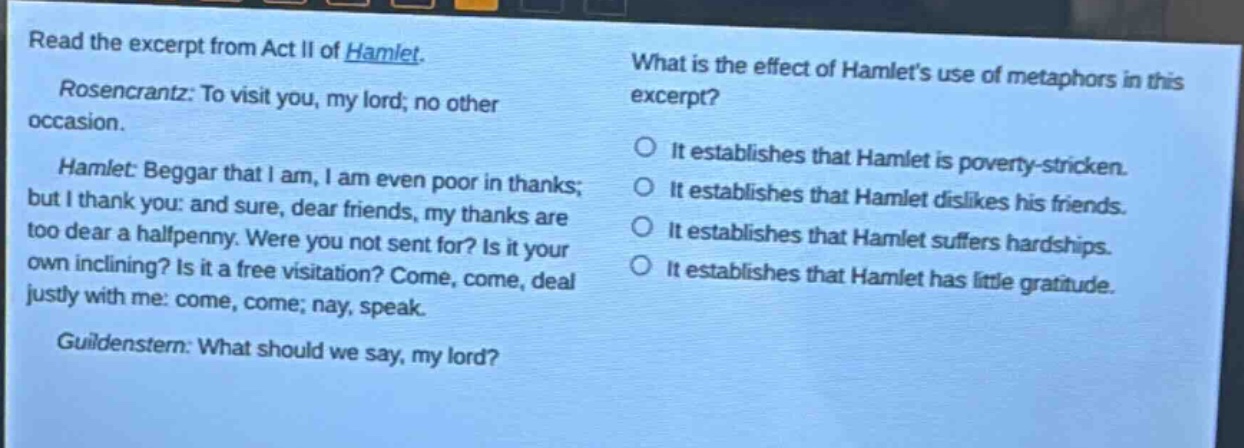
read the excerpt from act ii of hamlet. rosencrantz: to visit you, my lord; no other occasion. hamlet: beggar that i am, i am even poor in thanks; but i thank you: and sure, dear friends, my thanks are too dear a halfpenny. were you not sent for? is it your own inclining? is it a free visitation? come, come, deal justly with me: come, come; nay, speak. guildenstern: what should we say, my lord? what is the effect of hamlets use of metaphors in this excerpt? it establishes that hamlet is poverty - stricken. it establishes that hamlet dislikes his friends. it establishes that hamlet suffers hardships. it establishes that hamlet has little gratitude.
Answer
Answer:
It establishes that Hamlet has little gratitude.
Brief Explanation:
Hamlet uses "poor in thanks" metaphor. It implies lack of gratitude rather than literal poverty or dislike of friends.