read the excerpt from act ii, scene vi of romeo and juliet. friar laurence: these violent delights have…
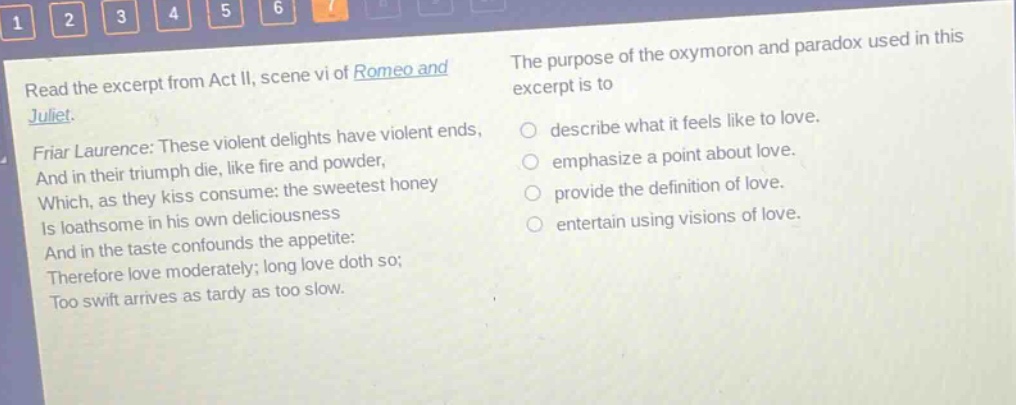
read the excerpt from act ii, scene vi of romeo and juliet. friar laurence: these violent delights have violent ends, and in their triumph die, like fire and powder, which, as they kiss consume: the sweetest honey is loathsome in his own deliciousness and in the taste confounds the appetite: therefore love moderately; long love doth so; too swift arrives as tardy as too slow. the purpose of the oxymoron and paradox used in this excerpt is to describe what it feels like to love. emphasize a point about love. provide the definition of love. entertain using visions of love.
Answer
Brief Explanations:
The oxymoron and paradox in the text are literary devices to make a point about love's nature. Friar Laurence uses these to show that intense love can have negative, self - consuming ends. It is not just to describe love, define it, or entertain but to emphasize a truth about love.
Answer:
emphasize a point about love.