read the excerpt from act iii, scene v of romeo and juliet. romeo: it was the lark, the herald of the morn…
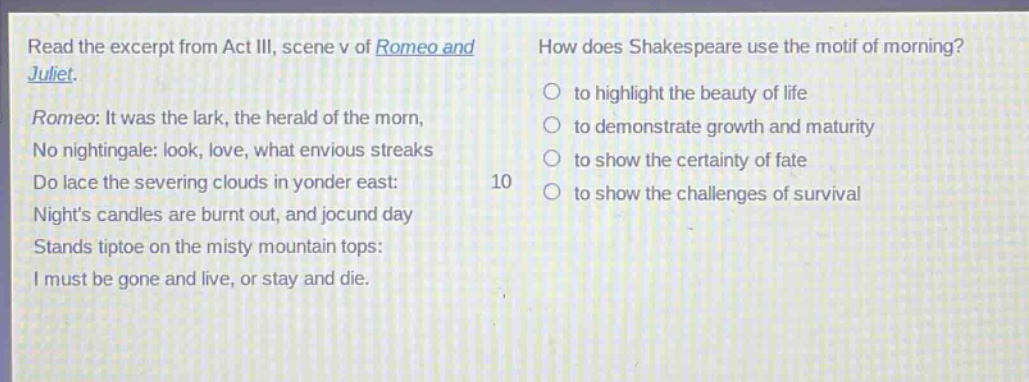
read the excerpt from act iii, scene v of romeo and juliet. romeo: it was the lark, the herald of the morn, no nightingale: look, love, what envious streaks do lace the severing clouds in yonder east: nights candles are burnt out, and jocund day stands tiptoe on the misty mountain tops: i must be gone and live, or stay and die. how does shakespeare use the motif of morning? to highlight the beauty of life to demonstrate growth and maturity to show the certainty of fate to show the challenges of survival
Answer
Brief Explanations:
In the excerpt, the lark (herald of the morn) signals the end of Romeo and Juliet's time together. Morning's arrival means Romeo must leave or face death, showing the certainty of their fated - separation.
Answer:
to show the certainty of fate