read the excerpt from act iii, scene i of romeo and juliet. tybalt: boy, this shall not excuse the injuries…
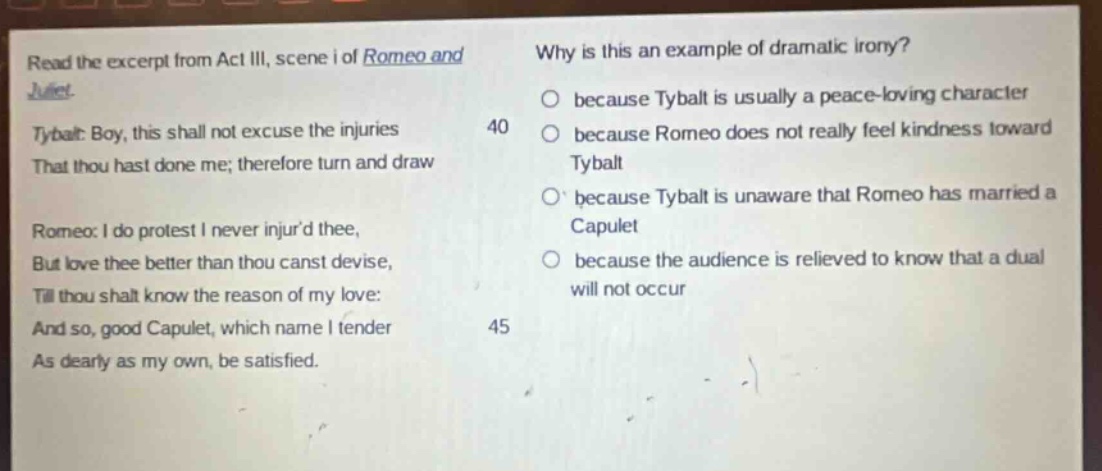
read the excerpt from act iii, scene i of romeo and juliet. tybalt: boy, this shall not excuse the injuries that thou hast done me; therefore turn and draw. romeo: i do protest i never injurd thee, but love thee better than thou canst devise, till thou shalt know the reason of my love: and so, good capulet, which name i tender as dearly as my own, be satisfied. why is this an example of dramatic irony? because tybalt is usually a peace - loving character because romeo does not really feel kindness toward tybalt because tybalt is unaware that romeo has married a capulet because the audience is relieved to know that a dual will not occur
Answer
Brief Explanations:
Dramatic irony occurs when the audience knows something that the characters do not. In this case, the audience knows that Romeo has married Juliet, a Capulet, but Tybalt is unaware of this connection and thus the reason for Romeo's reluctance to fight.
Answer:
because Tybalt is unaware that Romeo has married a Capulet