read the excerpt from act iv of hamlet. rosencrantz: take you me for a sponge, my lord? hamlet: ay, sir…
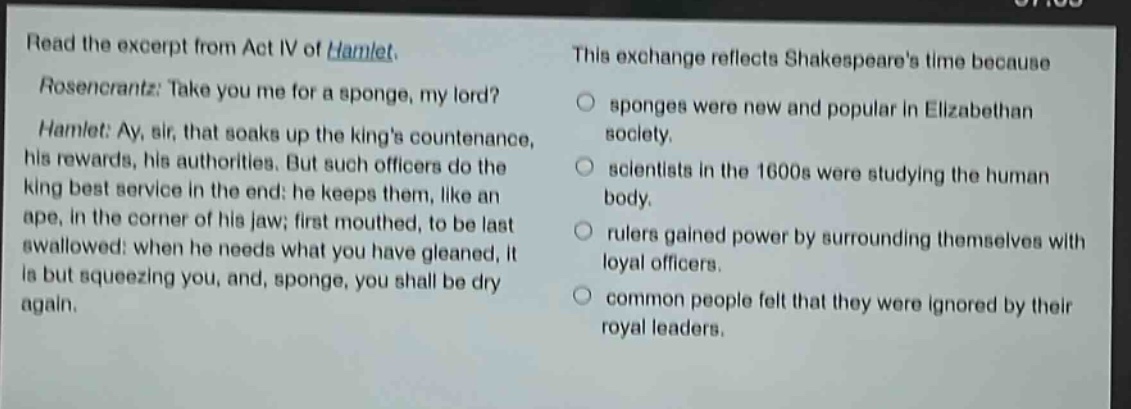
read the excerpt from act iv of hamlet. rosencrantz: take you me for a sponge, my lord? hamlet: ay, sir, that soaks up the kings countenance, his rewards, his authorities. but such officers do the king best service in the end: he keeps them, like an ape, in the corner of his jaw; first mouthed, to be last swallowed: when he needs what you have gleaned, it is but squeezing you, and, sponge, you shall be dry again. this exchange reflects shakespeares time because sponges were new and popular in elizabethan society. scientists in the 1600s were studying the human body. rulers gained power by surrounding themselves with loyal officers. common people felt that they were ignored by their royal leaders.
Answer
Brief Explanations:
In Shakespeare's time, rulers often surrounded themselves with loyal officers who would gain rewards and authority. Hamlet's metaphor of Rosencrantz as a sponge that soaks up the king's favor and can be squeezed dry when needed reflects this power - dynamic where rulers used their officers for their own ends.
Answer:
rulers gained power by surrounding themselves with loyal officers.