read the excerpt from act 5, scene 1, of julius caesar. antony. villains, you did not so, when your vile…
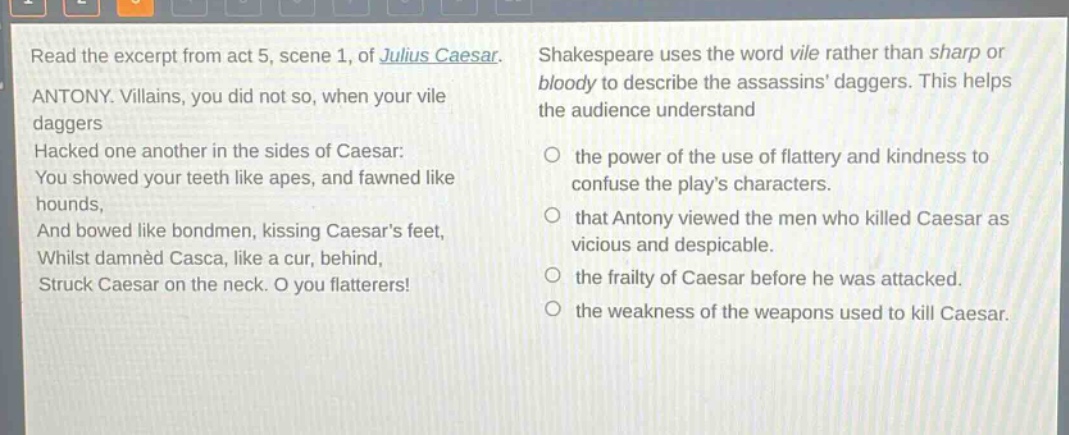
read the excerpt from act 5, scene 1, of julius caesar. antony. villains, you did not so, when your vile daggers hacked one another in the sides of caesar: you showed your teeth like apes, and fawned like hounds, and bowed like bondmen, kissing caesars feet, whilst damned casca, like a cur, behind, struck caesar on the neck. o you flatterers! shakespeare uses the word vile rather than sharp or bloody to describe the assassins daggers. this helps the audience understand the power of the use of flattery and kindness to confuse the plays characters. that antony viewed the men who killed caesar as vicious and despicable. the frailty of caesar before he was attacked. the weakness of the weapons used to kill caesar.
Answer
Brief Explanations:
The word "vile" has negative - connotations, suggesting viciousness and despicability. Antony uses it to express his low opinion of the assassins.
Answer:
that Antony viewed the men who killed Caesar as vicious and despicable.