read the excerpt from act 5, scene 1, of julius caesar. brutus. no, cassius, no: think not, thou noble…
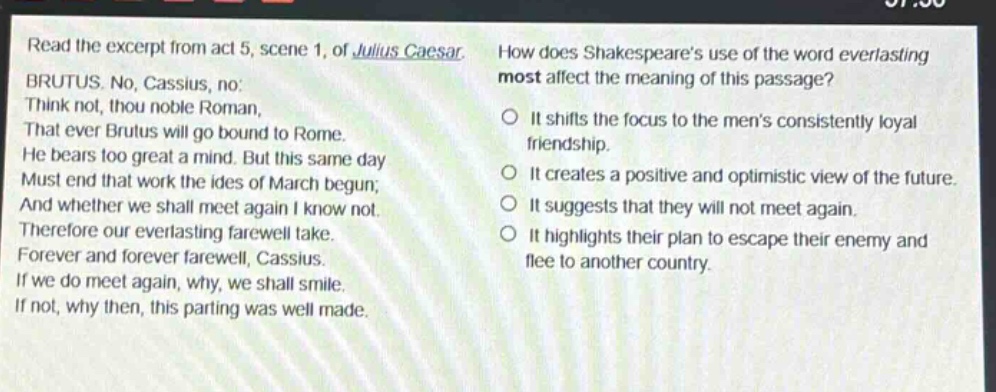
read the excerpt from act 5, scene 1, of julius caesar. brutus. no, cassius, no: think not, thou noble roman, that ever brutus will go bound to rome. he bears too great a mind. but this same day must end that work the ides of march begun; and whether we shall meet again i know not. therefore our everlasting farewell take. forever and forever farewell, cassius. if we do meet again, why, we shall smile. if not, why then, this parting was well made. how does shakespeares use of the word everlasting most affect the meaning of this passage? it shifts the focus to the mens consistently loyal friendship. it creates a positive and optimistic view of the future. it suggests that they will not meet again. it highlights their plan to escape their enemy and flee to another country.
Answer
Brief Explanations:
In the passage, Brutus says "everlasting farewell", suggesting a permanent separation. This implies they may not meet again.
Answer:
It suggests that they will not meet again.