read the excerpt from act 1, scene 3, of julius caesar. cassius. and why should caesar be a tyrant then…
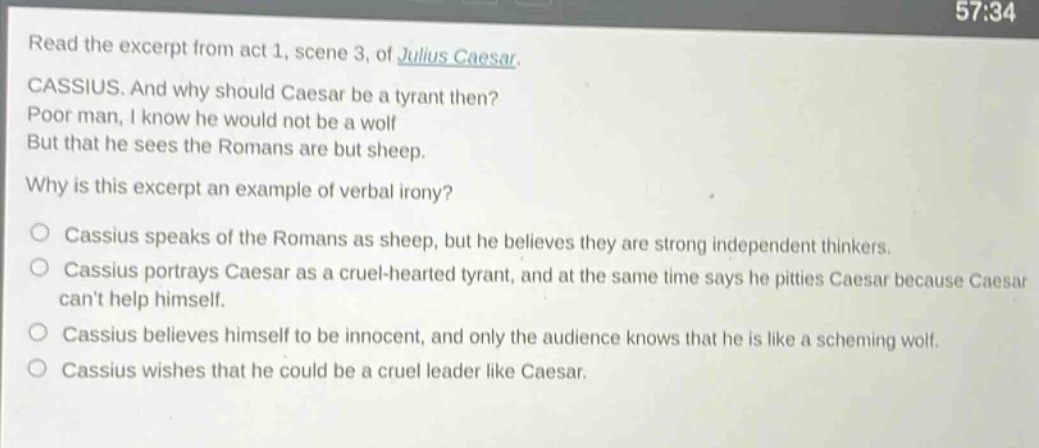
read the excerpt from act 1, scene 3, of julius caesar. cassius. and why should caesar be a tyrant then? poor man, i know he would not be a wolf but that he sees the romans are but sheep. why is this excerpt an example of verbal irony? cassius speaks of the romans as sheep, but he believes they are strong independent thinkers. cassius portrays caesar as a cruel - hearted tyrant, and at the same time says he pities caesar because caesar cant help himself. cassius believes himself to be innocent, and only the audience knows that he is like a scheming wolf. cassius wishes that he could be a cruel leader like caesar.
Answer
Answer:
B. Cassius portrays Caesar as a cruel - hearted tyrant, and at the same time says he pities Caesar because Caesar can't help himself.
Brief Explanation:
Verbal irony is when words express something contrary to truth. Here, Cassius calls Caesar a tyrant yet pities him, showing contradiction.