read the excerpt from act 5, scene 1, of julius caesar. octavius. come, antony, away! defiance, traitors…
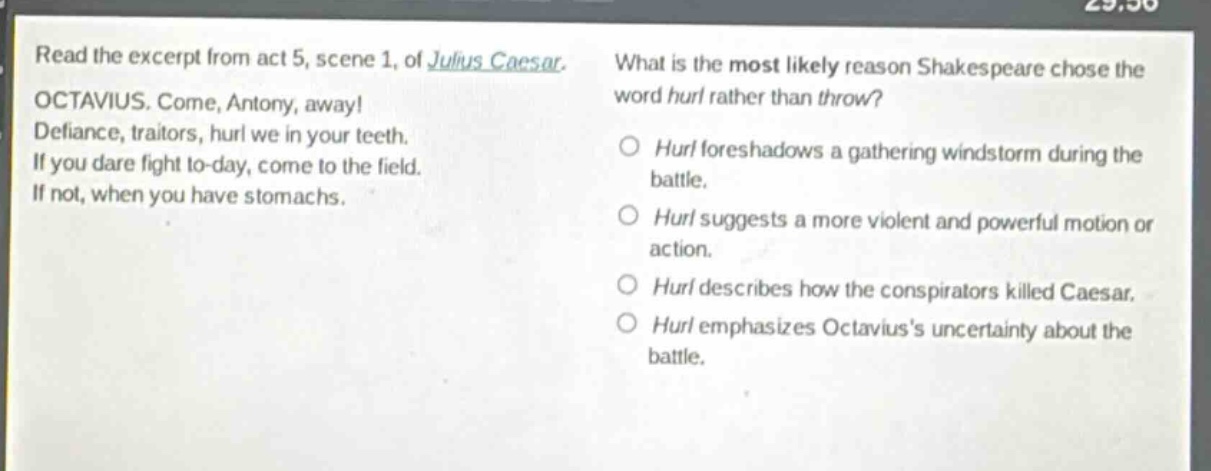
read the excerpt from act 5, scene 1, of julius caesar. octavius. come, antony, away! defiance, traitors, hurl we in your teeth. if you dare fight to - day, come to the field. if not, when you have stomachs. what is the most likely reason shakespeare chose the word hurl rather than throw? hurl foreshadows a gathering windstorm during the battle. hurl suggests a more violent and powerful motion or action. hurl describes how the conspirators killed caesar. hurl emphasizes octaviuss uncertainty about the battle.
Answer
Answer:
B. Hurl suggests a more violent and powerful motion or action.
Brief Explanations:
In the context, Octavius is showing defiance. "Hurl" conveys a stronger, more force - ful action than "throw", fitting the tone of defiance and aggression in the scene.