read the excerpt from enriques journey. most freight cars have two ladders on a side, each next to a set of…
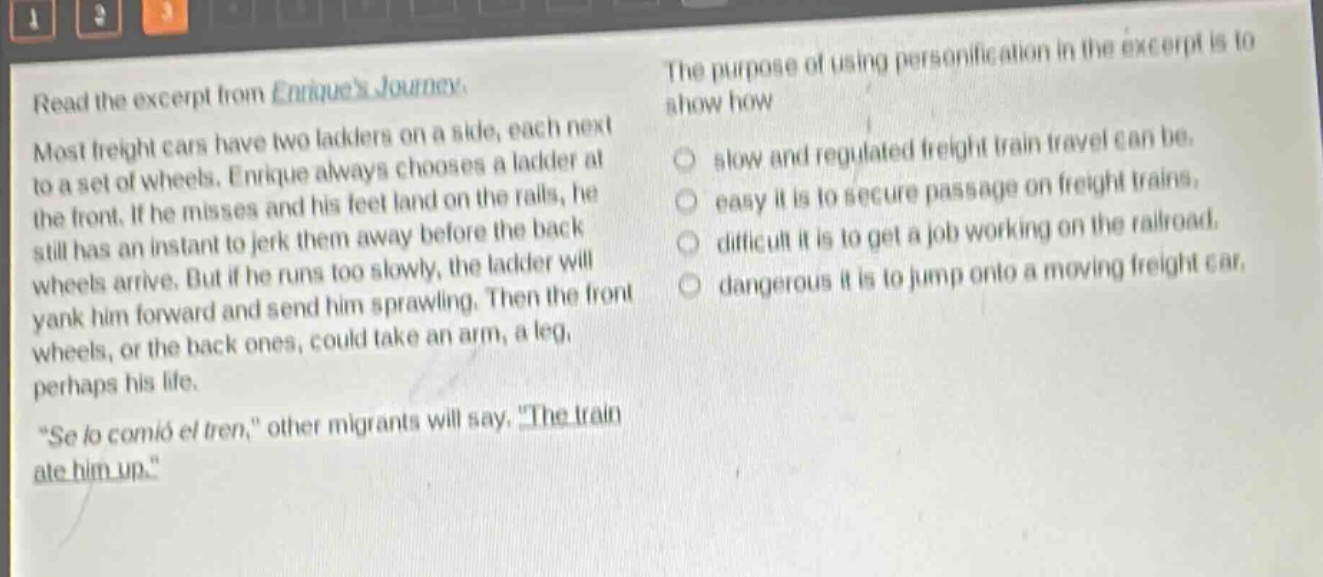
read the excerpt from enriques journey. most freight cars have two ladders on a side, each next to a set of wheels. enrique always chooses a ladder at the front. if he misses and his feet land on the rails, he still has an instant to jerk them away before the back wheels arrive. but if he runs too slowly, the ladder will yank him forward and send him sprawling. then the front wheels, or the back ones, could take an arm, a leg, perhaps his life. “se lo comió el tren,” other migrants will say. “the train ate him up.” the purpose of using personification in the excerpt is to show how slow and regulated freight train travel can be. easy it is to secure passage on freight trains. difficult it is to get a job working on the railroad. dangerous it is to jump onto a moving freight car.
Answer
Brief Explanations:
La personificación en "The train ate him up" da vida al tren, mostrando la peligrosidad de saltar a un vagón en movimiento. El tren se presenta como algo agresivo y mortal.
Answer:
dangerous it is to jump onto a moving freight car.