read the excerpt from a history of the world in 100 objects. what could be more domestic, more unremarkable…
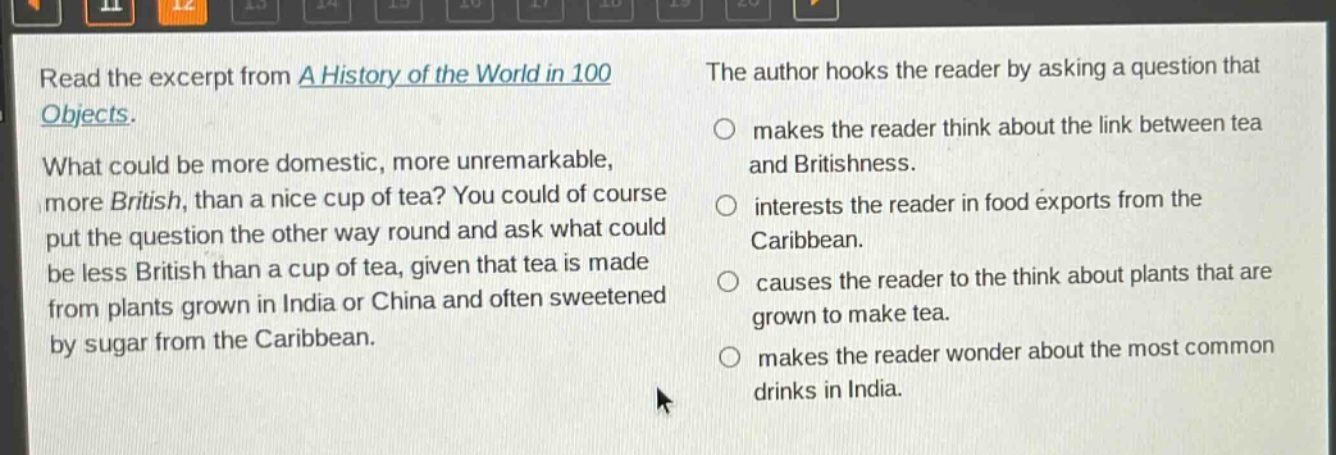
read the excerpt from a history of the world in 100 objects. what could be more domestic, more unremarkable, more british, than a nice cup of tea? you could of course put the question the other way round and ask what could be less british than a cup of tea, given that tea is made from plants grown in india or china and often sweetened by sugar from the caribbean. the author hooks the reader by asking a question that makes the reader think about the link between tea and britishness. interests the reader in food exports from the caribbean. causes the reader to the think about plants that are grown to make tea. makes the reader wonder about the most common drinks in india.
Answer
Brief Explanations:
The author starts with a question about tea's British - ness, highlighting the complex relationship between tea and British identity considering its non - British origins.
Answer:
A. makes the reader think about the link between tea and Britishness.