read the excerpt from julius caesar, act 1, scene 2. soothsayer. beware the ides of march. caesar. what man…
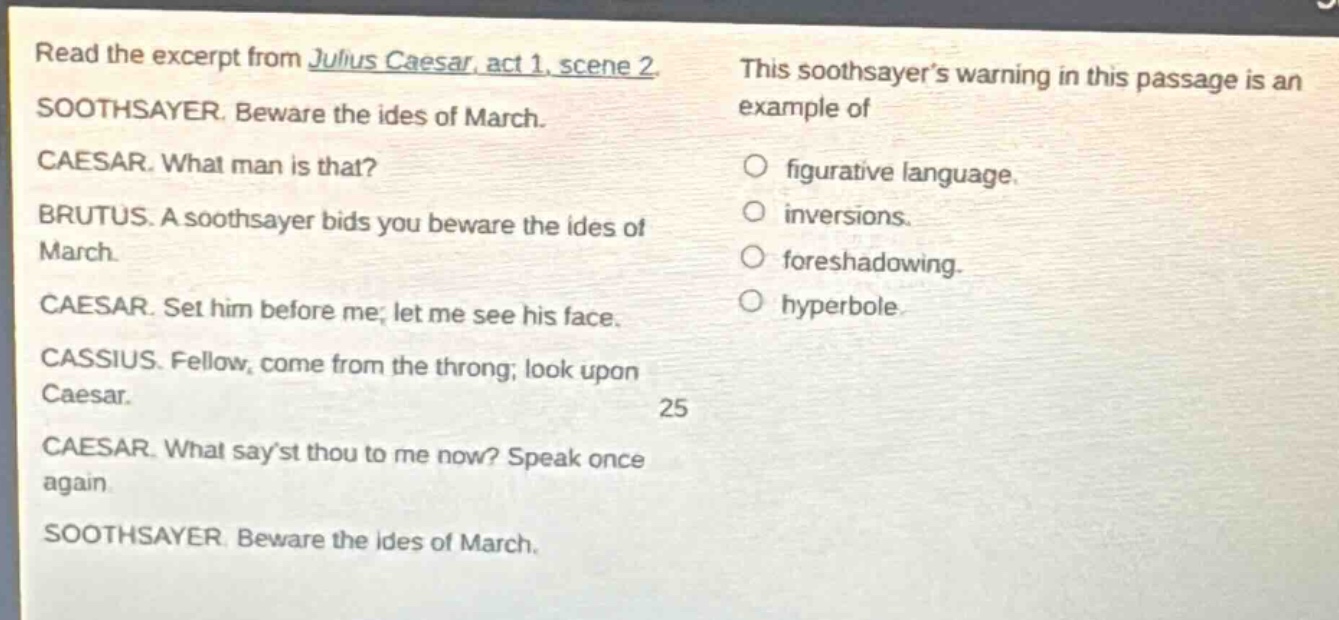
read the excerpt from julius caesar, act 1, scene 2. soothsayer. beware the ides of march. caesar. what man is that? brutus. a soothsayer bids you beware the ides of march. caesar. set him before me; let me see his face. cassius. fellow, come from the throng; look upon caesar. caesar. what sayst thou to me now? speak once again. soothsayer. beware the ides of march. this soothsayers warning in this passage is an example of figurative language. inversions. foreshadowing. hyperbole.
Answer
Brief Explanations:
Foreshadowing is a literary device where an event hints at a future event. The soothsayer's warning "Beware the ides of March" hints at Caesar's assassination which occurs later. It is not just a general figurative language, not an inversion (word - order change), and not hyperbole (exaggeration).
Answer:
foreshadowing