read the excerpts from ovids pyramus and thisbe and shakespeares romeo and juliet. \pyramus and thisbe\ they…
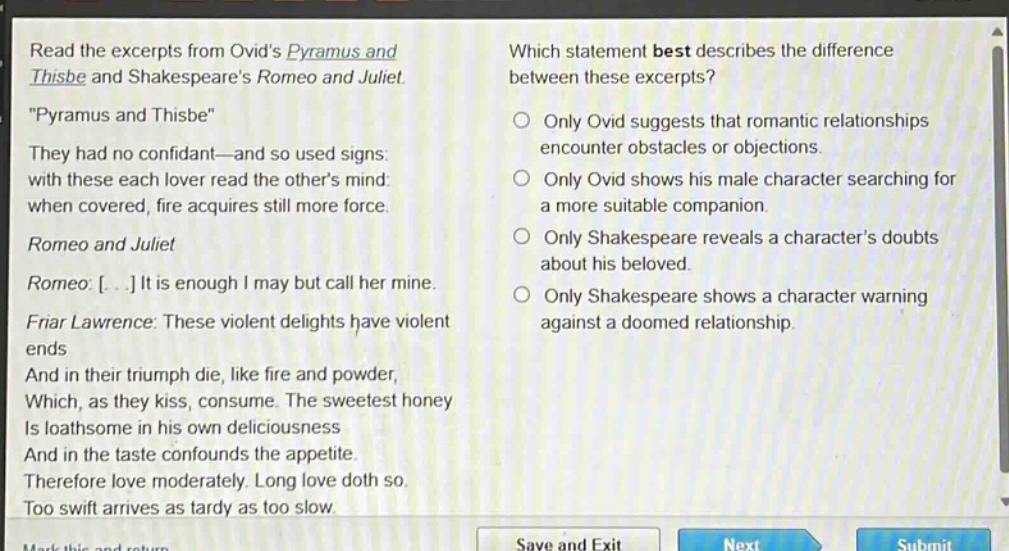
read the excerpts from ovids pyramus and thisbe and shakespeares romeo and juliet. \pyramus and thisbe\ they had no confidant—and so used signs: with these each lover read the others mind: when covered, fire acquires still more force. romeo and juliet romeo: . . . it is enough i may but call her mine. friar lawrence: these violent delights have violent ends and in their triumph die, like fire and powder, which, as they kiss, consume. the sweetest honey is loathsome in his own deliciousness and in the taste confounds the appetite. therefore love moderately. long love doth so. too swift arrives as tardy as too slow. which statement best describes the difference between these excerpts? only ovid suggests that romantic relationships encounter obstacles or objections. only ovid shows his male character searching for a more suitable companion. only shakespeare reveals a characters doubts about his beloved. only shakespeare shows a character warning against a doomed relationship.
Answer
Answer:
D. Only Shakespeare shows a character warning against a doomed relationship.
Brief Explanations:
In the Ovid excerpt, there's no warning about a doomed relationship. In Shakespeare's, Friar Lawrence warns Romeo about violent delights having violent ends, indicating a doomed - natured relationship.