read the exchange between romeo and nurse in act ii, scene iv of romeo and juliet. romeo: bid her devise…
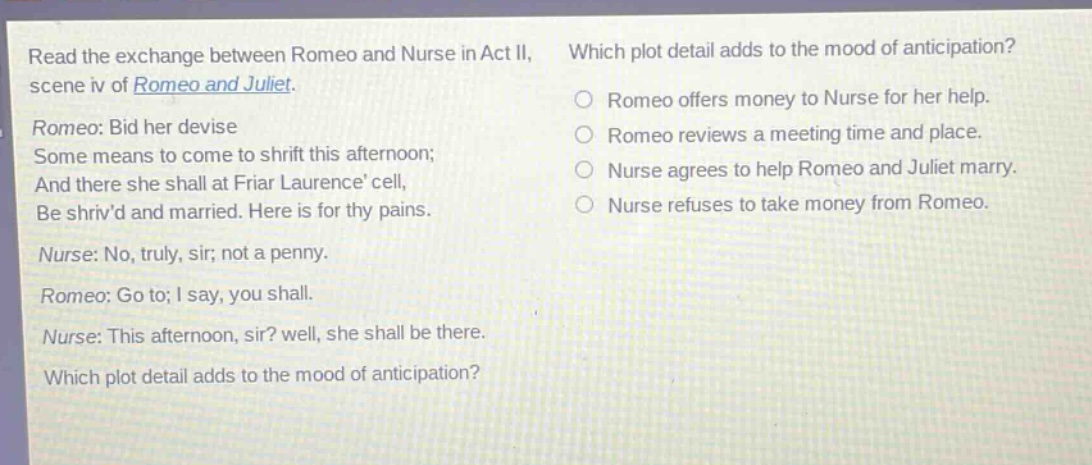
read the exchange between romeo and nurse in act ii, scene iv of romeo and juliet. romeo: bid her devise some means to come to shrift this afternoon; and there she shall at friar laurence cell, be shrivd and married. here is for thy pains. nurse: no, truly, sir; not a penny. romeo: go to; i say, you shall. nurse: this afternoon, sir? well, she shall be there. which plot detail adds to the mood of anticipation? which plot detail adds to the mood of anticipation? romeo offers money to nurse for her help. romeo reviews a meeting time and place. nurse agrees to help romeo and juliet marry. nurse refuses to take money from romeo.
Answer
Brief Explanations:
Anticipation is created by events that build - up to something significant. Reviewing a meeting time and place heightens the sense of waiting for an important encounter. Offering or refusing money is more about a transaction. Agreeing to help marry is a decision, not as anticipatory as the specific meeting details.
Answer:
Romeo reviews a meeting time and place.