read the lines from \harlem.\ maybe it just sags like a heavy load. read the lines from \the weary blues.\…
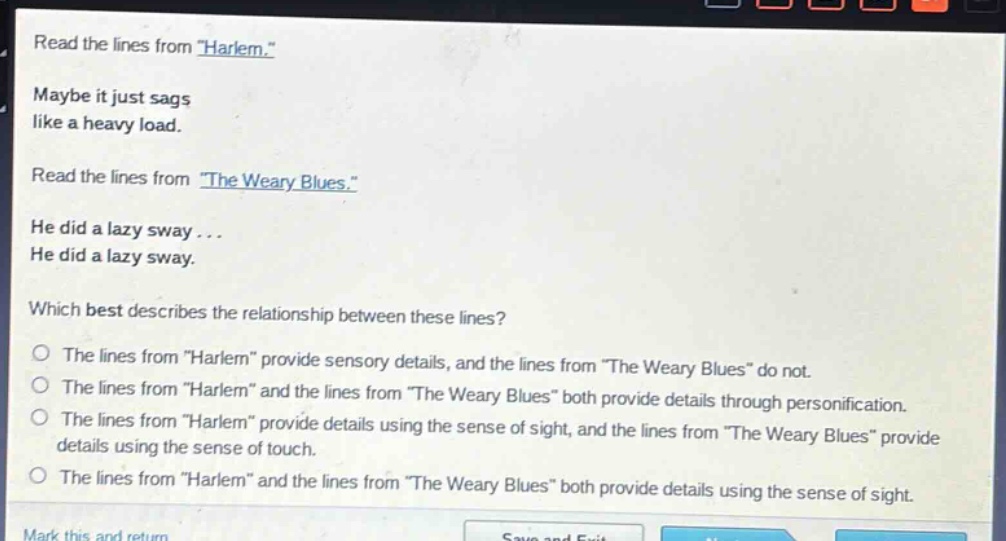
read the lines from \harlem.\ maybe it just sags like a heavy load. read the lines from \the weary blues.\ he did a lazy sway . . . he did a lazy sway. which best describes the relationship between these lines? the lines from \harlem\ provide sensory details, and the lines from \the weary blues\ do not. the lines from \harlem\ and the lines from \the weary blues\ both provide details through personification. the lines from \harlem\ provide details using the sense of sight, and the lines from \the weary blues\ provide details using the sense of touch. the lines from \harlem\ and the lines from \the weary blues\ both provide details using the sense of sight.
Answer
Brief Explanations:
In "Harlem", "sags like a heavy load" appeals to sight. In "The Weary Blues", "a lazy sway" is also a visual - based detail.
Answer:
The lines from "Harlem" and the lines from "The Weary Blues" both provide details using the sense of sight.