read the passage from act v of hamlet. laertes: he is justly servd; it is a poison temperd by himself…
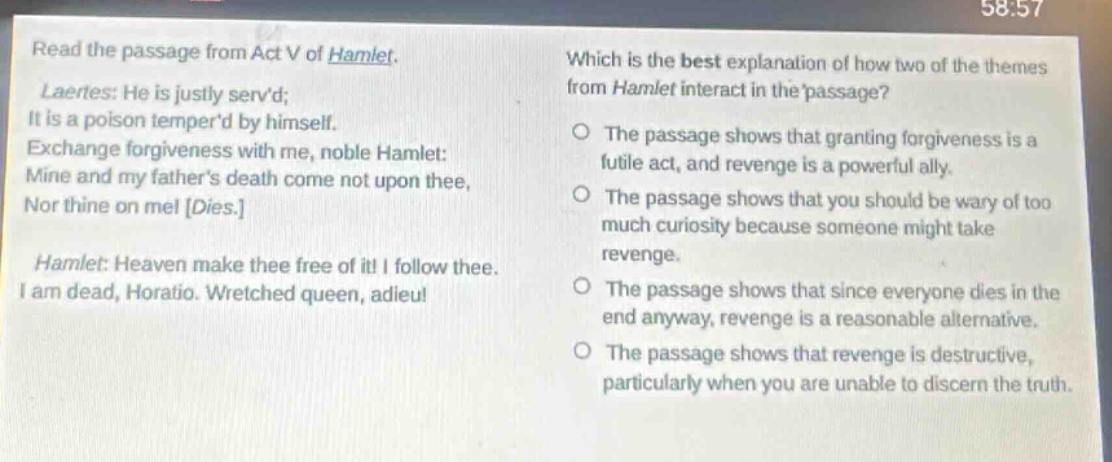
read the passage from act v of hamlet. laertes: he is justly servd; it is a poison temperd by himself. exchange forgiveness with me, noble hamlet: mine and my fathers death come not upon thee, nor thine on me! dies. hamlet: heaven make thee free of it! i follow thee. i am dead, horatio. wretched queen, adieu! which is the best explanation of how two of the themes from hamlet interact in the passage? the passage shows that granting forgiveness is a futile act, and revenge is a powerful ally. the passage shows that you should be wary of too much curiosity because someone might take revenge. the passage shows that since everyone dies in the end anyway, revenge is a reasonable alternative. the passage shows that revenge is destructive, particularly when you are unable to discern the truth.
Answer
Brief Explanations:
In the passage, Laertes and Hamlet are in a deadly situation due to revenge - related actions. Laertes is dying from his own poisoned weapon, and Hamlet is also about to die. This shows how revenge can be destructive, especially when truth - seeking is muddled. The other options do not accurately represent the themes in this passage. Forgiveness is not shown as futile here, and the passage is not mainly about being wary of curiosity. Also, revenge is not presented as a reasonable alternative.
Answer:
The passage shows that revenge is destructive, particularly when you are unable to discern the truth.