read the passage from act 5, scene 5, of the tragedy of julius caesar. brutus. farewell to you, and you, and…
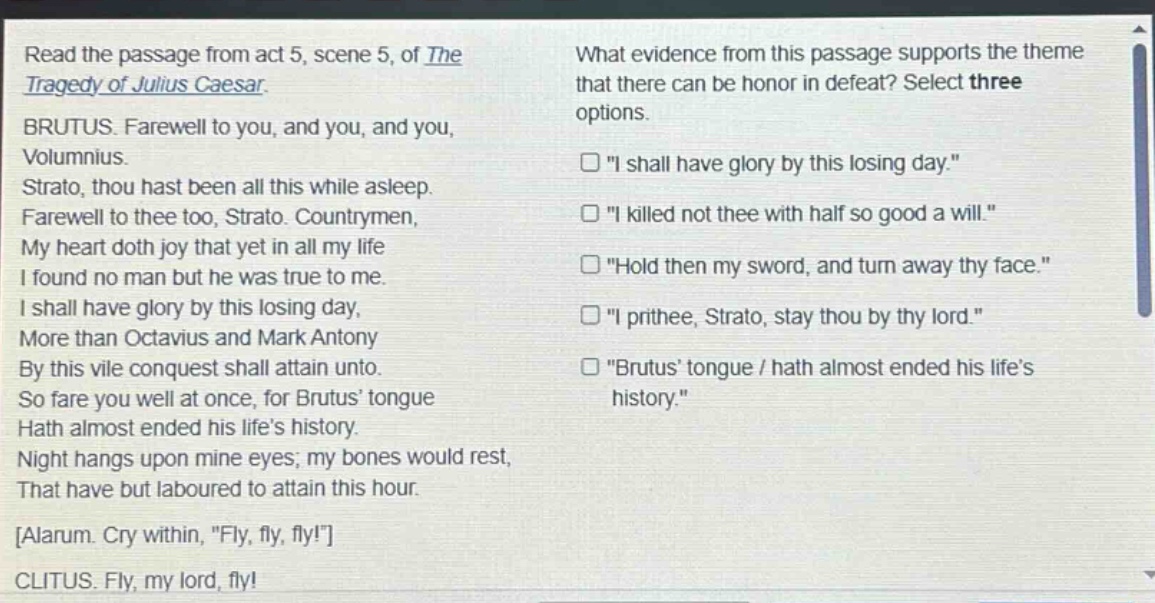
read the passage from act 5, scene 5, of the tragedy of julius caesar. brutus. farewell to you, and you, and you, volumnius. strato, thou hast been all this while asleep. farewell to thee too, strato. countrymen, my heart doth joy that yet in all my life i found no man but he was true to me. i shall have glory by this losing day, more than octavius and mark antony by this vile conquest shall attain unto. so fare you well at once, for brutus tongue hath almost ended his lifes history. night hangs upon mine eyes; my bones would rest, that have but laboured to attain this hour. alarum. cry within, \fly, fly, fly!\ clitus. fly, my lord, fly! what evidence from this passage supports the theme that there can be honor in defeat? select three options. \i shall have glory by this losing day.\ \i killed not thee with half so good a will.\ \hold then my sword, and turn away thy face.\ \i prithee, strato, stay thou by thy lord.\ \brutus tongue / hath almost ended his lifes history.\
Answer
Brief Explanations:
- "I shall have glory by this losing day." - Brutus believes he gains glory in defeat, showing honor.
- "Hold then my sword, and turn away thy face." - His request for help in dying shows a sense of honor in his situation.
- "Brutus' tongue / hath almost ended his life's history." - It implies his acceptance of the end in a dignified way.
Answer:
"I shall have glory by this losing day.", "Hold then my sword, and turn away thy face.", "Brutus' tongue / hath almost ended his life's history."