read the passage from act 4, scene 3, of the tragedy of julius caesar. brutus. no man bears sorrow better…
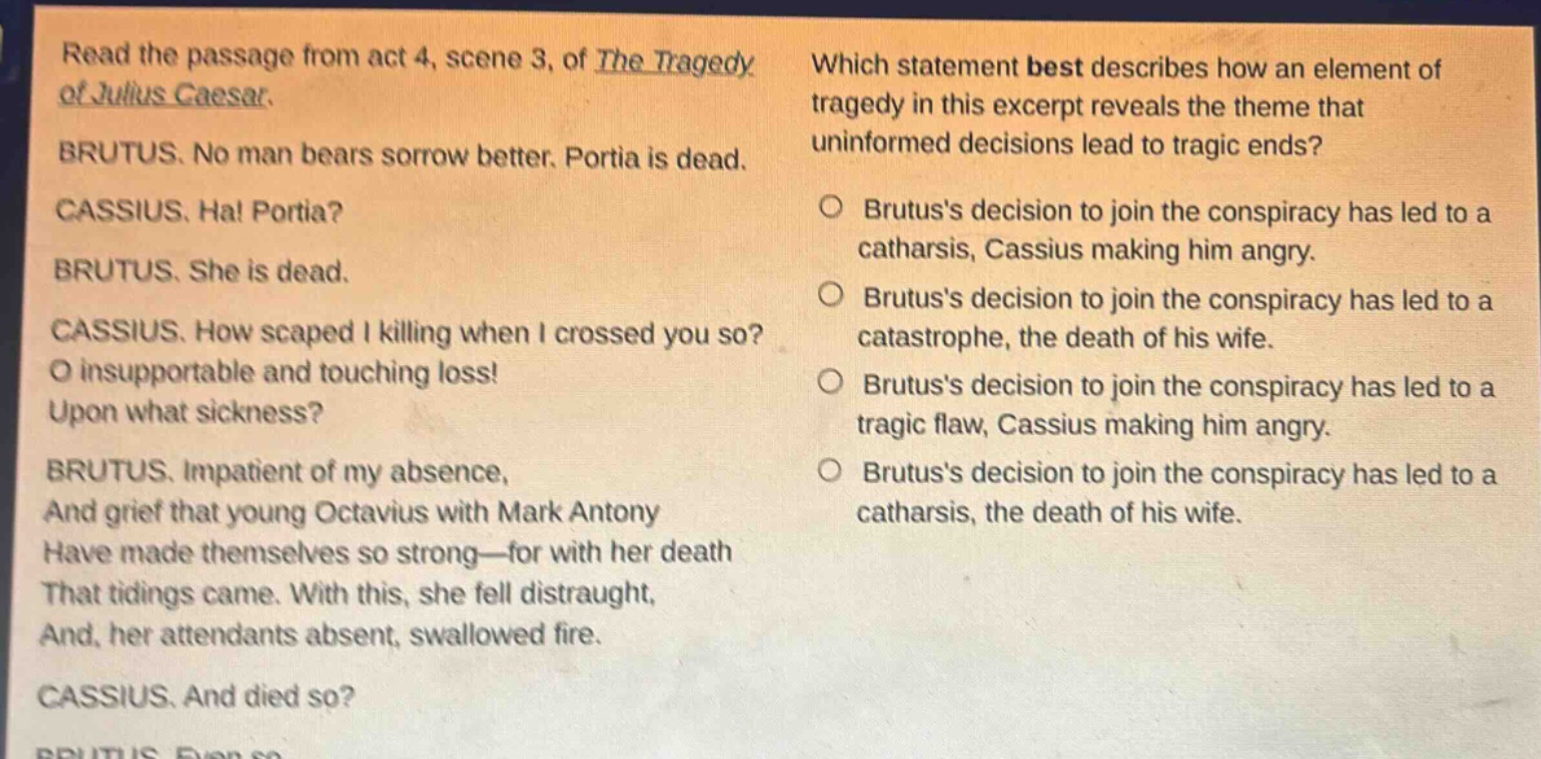
read the passage from act 4, scene 3, of the tragedy of julius caesar. brutus. no man bears sorrow better. portia is dead. cassius. ha! portia? brutus. she is dead. cassius. how scaped i killing when i crossed you so? o insupportable and touching loss! upon what sickness? brutus. impatient of my absence, and grief that young octavius with mark antony have made themselves so strong—for with her death that tidings came. with this, she fell distraught, and, her attendants absent, swallowed fire. cassius. and died so? which statement best describes how an element of tragedy in this excerpt reveals the theme that uninformed decisions lead to tragic ends? brutuss decision to join the conspiracy has led to a catharsis, cassius making him angry. brutuss decision to join the conspiracy has led to a catastrophe, the death of his wife. brutuss decision to join the conspiracy has led to a tragic flaw, cassius making him angry. brutuss decision to join the conspiracy has led to a catharsis, the death of his wife.
Answer
Brief Explanations:
In the passage, Brutus' decision to join the conspiracy against Caesar is an uninformed one. This decision has led to a series of tragic events, and here the death of his wife Portia is presented as a catastrophe resulting from his actions. Catharsis is an emotional release, and a tragic flaw is a character - trait that leads to downfall, neither of which directly relate to the theme of uninformed decisions leading to tragic ends as strongly as the idea of catastrophe.
Answer:
Brutus's decision to join the conspiracy has led to a catastrophe, the death of his wife.