read the passage. then answer the question that follows. brutus. thy master is a wise and valiant roman; i…
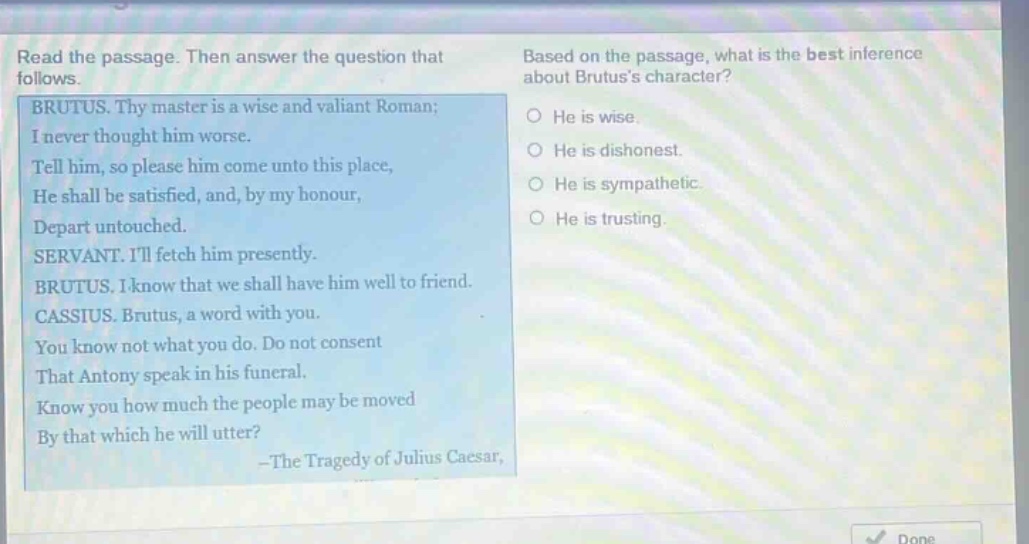
read the passage. then answer the question that follows. brutus. thy master is a wise and valiant roman; i never thought him worse. tell him, so please him come unto this place, he shall be satisfied, and, by my honour, depart untouched. servant. ill fetch him presently. brutus. i know that we shall have him well to friend. cassius. brutus, a word with you. you know not what you do. do not consent that antony speak in his funeral. know you how much the people may be moved by that which he will utter? -the tragedy of julius caesar, based on the passage, what is the best inference about brutuss character? he is wise. he is dishonest. he is sympathetic. he is trusting.
Answer
Brief Explanations:
Brutus describes another as wise and valiant and says he never thought him worse. He also believes they can make him a friend and gives his honour - indicating trust. There is no evidence for dishonesty or sympathy, and the wisdom he attributes is to another. His willingness to believe things will go well shows he is trusting.
Answer:
He is trusting.