read the passage from \the caged bird.\ but a bird that stalks down his narrow cage can seldom see through…
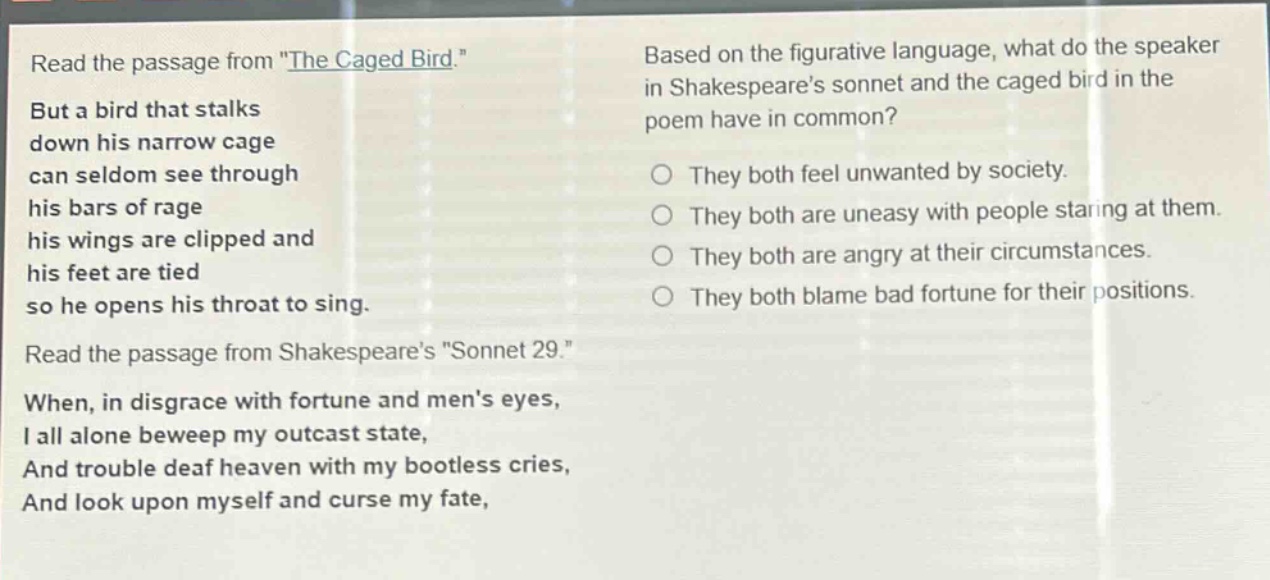
read the passage from \the caged bird.\ but a bird that stalks down his narrow cage can seldom see through his bars of rage his wings are clipped and his feet are tied so he opens his throat to sing. read the passage from shakespeares \sonnet 29.\ when, in disgrace with fortune and mens eyes, i all alone beweep my outcast state, and trouble deaf heaven with my bootless cries, and look upon myself and curse my fate, based on the figurative language, what do the speaker in shakespeares sonnet and the caged bird in the poem have in common? they both feel unwanted by society. they both are uneasy with people staring at them. they both are angry at their circumstances. they both blame bad fortune for their positions.
Answer
Brief Explanations:
In "The Caged Bird", the bird is angry due to being caged, with clipped wings and tied feet. In Shakespeare's "Sonnet 29", the speaker is in disgrace and curses their fate. Both express anger at their situations.
Answer:
They both are angry at their circumstances.