read the passage from sugar changed the world. the age of honey there was a time before sugar, when those…
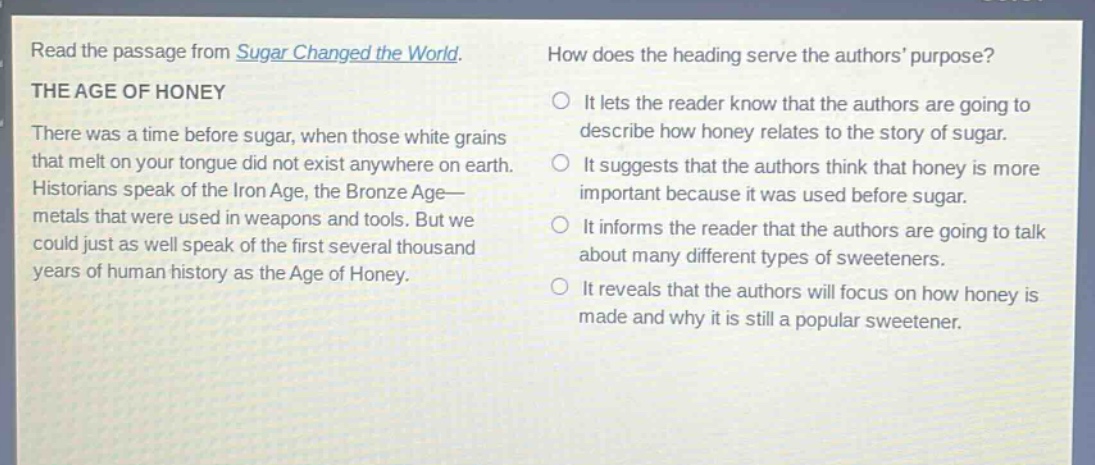
read the passage from sugar changed the world. the age of honey there was a time before sugar, when those white grains that melt on your tongue did not exist anywhere on earth. historians speak of the iron age, the bronze age— metals that were used in weapons and tools. but we could just as well speak of the first several thousand years of human history as the age of honey. how does the heading serve the authors purpose? it lets the reader know that the authors are going to describe how honey relates to the story of sugar. it suggests that the authors think that honey is more important because it was used before sugar. it informs the reader that the authors are going to talk about many different types of sweeteners. it reveals that the authors will focus on how honey is made and why it is still a popular sweetener.
Answer
Brief Explanations:
The heading "THE AGE OF HONEY" in the context of a book about sugar indicates that the authors will discuss the relationship between honey and the story of sugar. It doesn't imply honey is more important, doesn't suggest a focus on multiple sweeteners, and doesn't indicate a focus on honey - making and popularity.
Answer:
It lets the reader know that the authors are going to describe how honey relates to the story of sugar.