read the passage from sugar changed the world. we all crave sweetness, now more than ever since there are so…
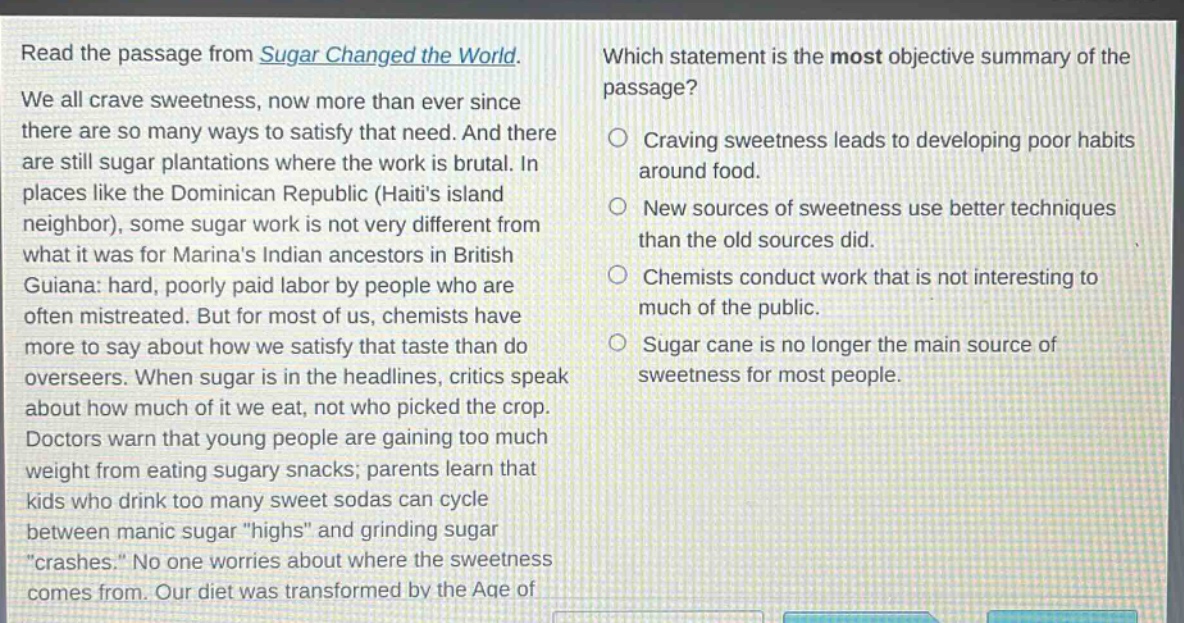
read the passage from sugar changed the world. we all crave sweetness, now more than ever since there are so many ways to satisfy that need. and there are still sugar plantations where the work is brutal. in places like the dominican republic (haitis island neighbor), some sugar work is not very different from what it was for marinas indian ancestors in british guiana: hard, poorly paid labor by people who are often mistreated. but for most of us, chemists have more to say about how we satisfy that taste than do overseers. when sugar is in the headlines, critics speak about how much of it we eat, not who picked the crop. doctors warn that young people are gaining too much weight from eating sugary snacks; parents learn that kids who drink too many sweet sodas can cycle between manic sugar \highs\ and grinding sugar \crashes.\ no one worries about where the sweetness comes from. our diet was transformed by the age of which statement is the most objective summary of the passage? craving sweetness leads to developing poor habits around food. new sources of sweetness use better techniques than the old sources did. chemists conduct work that is not interesting to much of the public. sugar cane is no longer the main source of sweetness for most people.
Answer
Brief Explanations:
The passage discusses the human craving for sweetness, the harsh labor in sugar - plantations, and how people focus on the consumption and health aspects of sugar rather than its source. Option A is about food habits related to sugar craving, which is part of the passage but not the overall summary. Option B about new vs old sweetness sources' techniques is not in the passage. Option C about chemists' work not being interesting to the public is not the main point. Option D is not the main idea as the passage doesn't emphasize sugar - cane not being the main source of sweetness. The passage mainly shows that while we all want sweetness, the source and the harsh labor behind it are often overlooked. The closest to an objective summary is that craving sweetness leads to developing poor habits around food as it touches on the consumption side which is a key part of the passage.
Answer:
Craving sweetness leads to developing poor habits around food.