simple past (verb to be)\nform:\nsingular nouns\n(+)\ni was...\nhe was...\nshe was...\nit was...\n(-)\ni was…
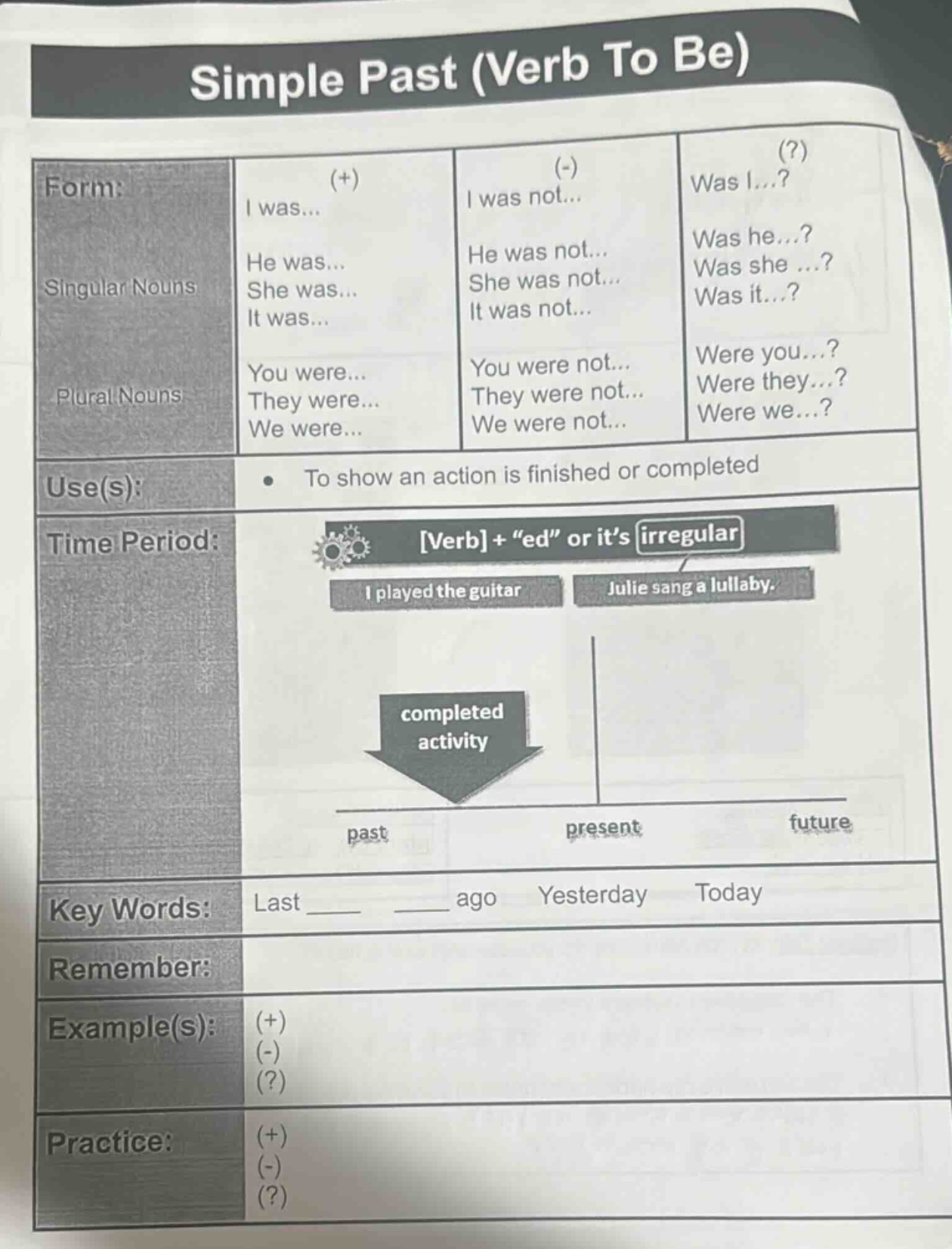
simple past (verb to be)\nform:\nsingular nouns\n(+)\ni was...\nhe was...\nshe was...\nit was...\n(-)\ni was not...\nhe was not...\nshe was not...\nit was not...\n(?)\nwas i...?\nwas he...?\nwas she...?\nwas it...?\nplural nouns\nyou were...\nthey were...\nwe were...\nyou were not...\nthey were not...\nwe were not...\nwere you...?\nwere they...?\nwere we...?\nuse(s):\n- to show an action is finished or completed\ntime period:\nverb + \ed\ or its irregular\ni played the guitar\njulie sang a lullaby.\ncompleted activity\npast present future\nkey words:\nlast ____ ____ ago yesterday today\nremember:\nexample(s):\n(+)\n(-)\n(?)\npractice:\n(+)\n(-)\n(?)
Answer
Brief Explanations:
The problem is about the Simple Past tense of the verb "to be", which falls under the subfield of Linguistics (a subfield of Arts) as it deals with the structure and usage of language, specifically English grammar.
Answer:
The subfield that best applies is Linguistics (under Arts).