what causes a solution to a rational equation to be an extraneous solution?\no when there is more than one…
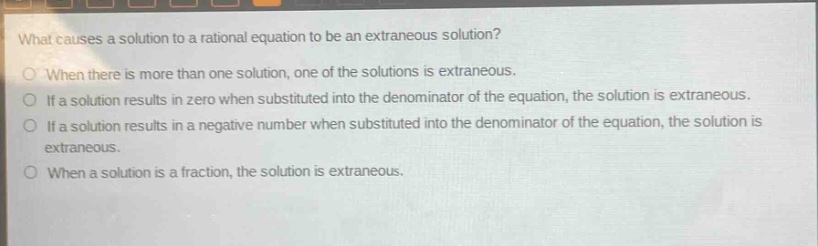
what causes a solution to a rational equation to be an extraneous solution?\no when there is more than one solution, one of the solutions is extraneous.\no if a solution results in zero when substituted into the denominator of the equation, the solution is extraneous.\no if a solution results in a negative number when substituted into the denominator of the equation, the solution is extraneous.\no when a solution is a fraction, the solution is extraneous.
Answer
Brief Explanations:
In rational - equations, the denominator cannot be zero. If a solution makes the denominator zero when substituted back into the original equation, it is not a valid solution for the original rational equation and is called an extraneous solution.
Answer:
If a solution results in zero when substituted into the denominator of the equation, the solution is extraneous.