two rigid transformations are used to map △jkl to △mnq. the first is a translation of vertex l to vertex q…
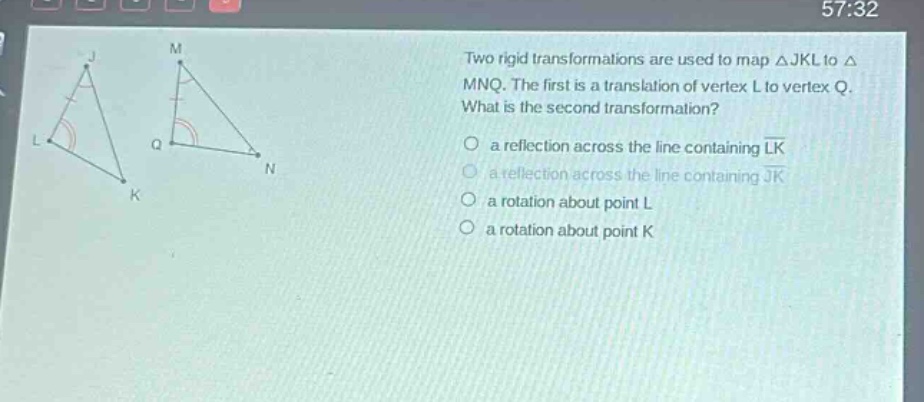
two rigid transformations are used to map △jkl to △mnq. the first is a translation of vertex l to vertex q. what is the second transformation? a reflection across the line containing lk a reflection across the line containing jk a rotation about point l a rotation about point k
Answer
Brief Explanations:
- Analyze rigid - transformations: Rigid transformations include translations, rotations, and reflections. After translating vertex L to vertex Q, we need to align the other parts of the triangles.
- Consider rotation: Rotating about a point can change the orientation of the triangle. Since vertex L is already translated to Q, rotating about point L can help in mapping the remaining vertices and sides correctly. Reflecting across lines containing LK or JK would change the orientation in a different way that is not suitable for mapping △JKL to △MNQ after the given translation.
Answer:
a rotation about point L