arrange the tiles in the order in which the process of silk screening occurs. a design is drawn directly…
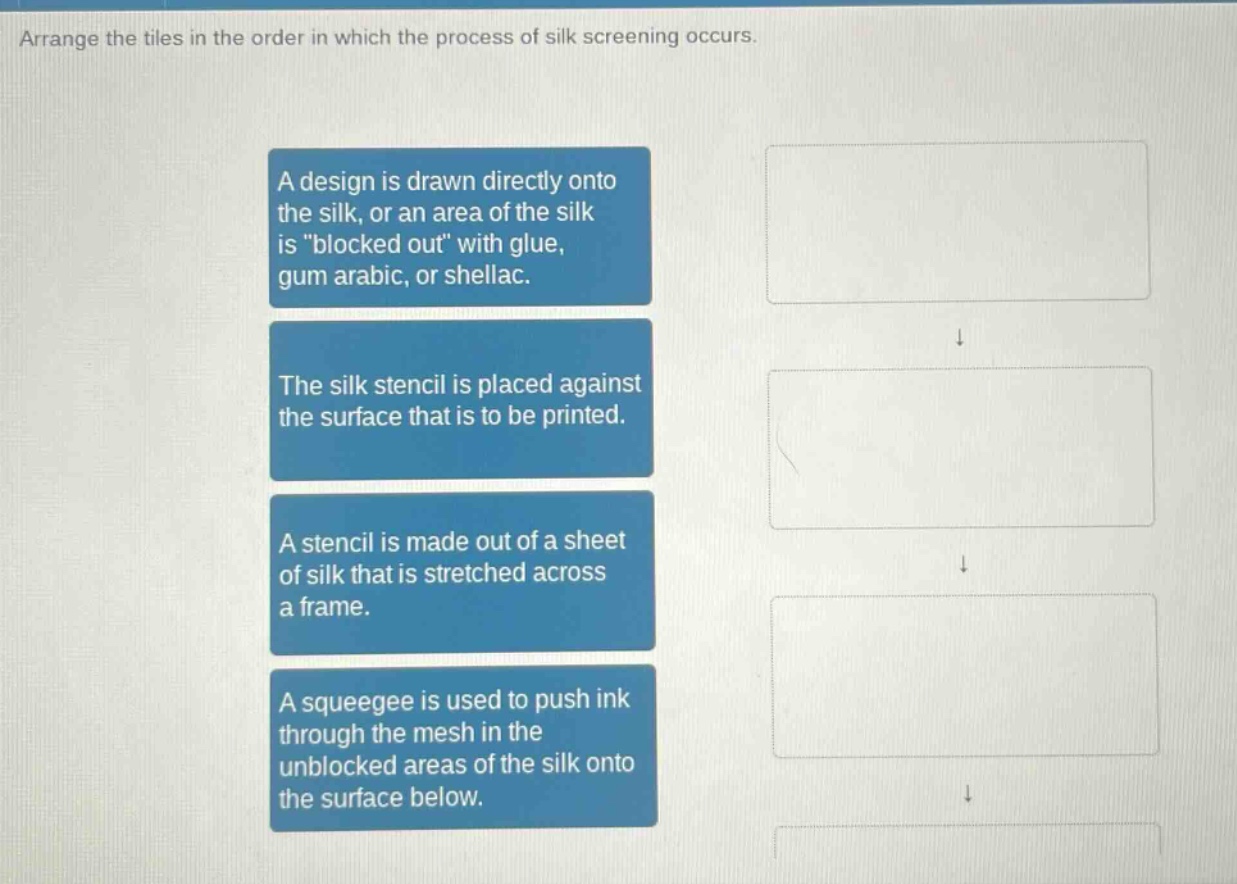
arrange the tiles in the order in which the process of silk screening occurs. a design is drawn directly onto the silk, or an area of the silk is \blocked out\ with glue, gum arabic, or shellac. the silk stencil is placed against the surface that is to be printed. a stencil is made out of a sheet of silk that is stretched across a frame. a squeegee is used to push ink through the mesh in the unblocked areas of the silk onto the surface below.
Answer
Brief Explanations:
First, a stencil is made by stretching silk across a frame. Then, a design is created on the silk by drawing or blocking out areas. Next, the silk stencil is placed against the surface to be printed. Finally, a squeegee is used to push ink through the unblocked areas.
Answer:
- A stencil is made out of a sheet of silk that is stretched across a frame.
- A design is drawn directly onto the silk, or an area of the silk is "blocked out" with glue, gum arabic, or shellac.
- The silk stencil is placed against the surface that is to be printed.
- A squeegee is used to push ink through the mesh in the unblocked areas of the silk onto the surface below.