determine the type of sampling used (simple random, stratified, systematic, cluster, or convenience).\na. a…
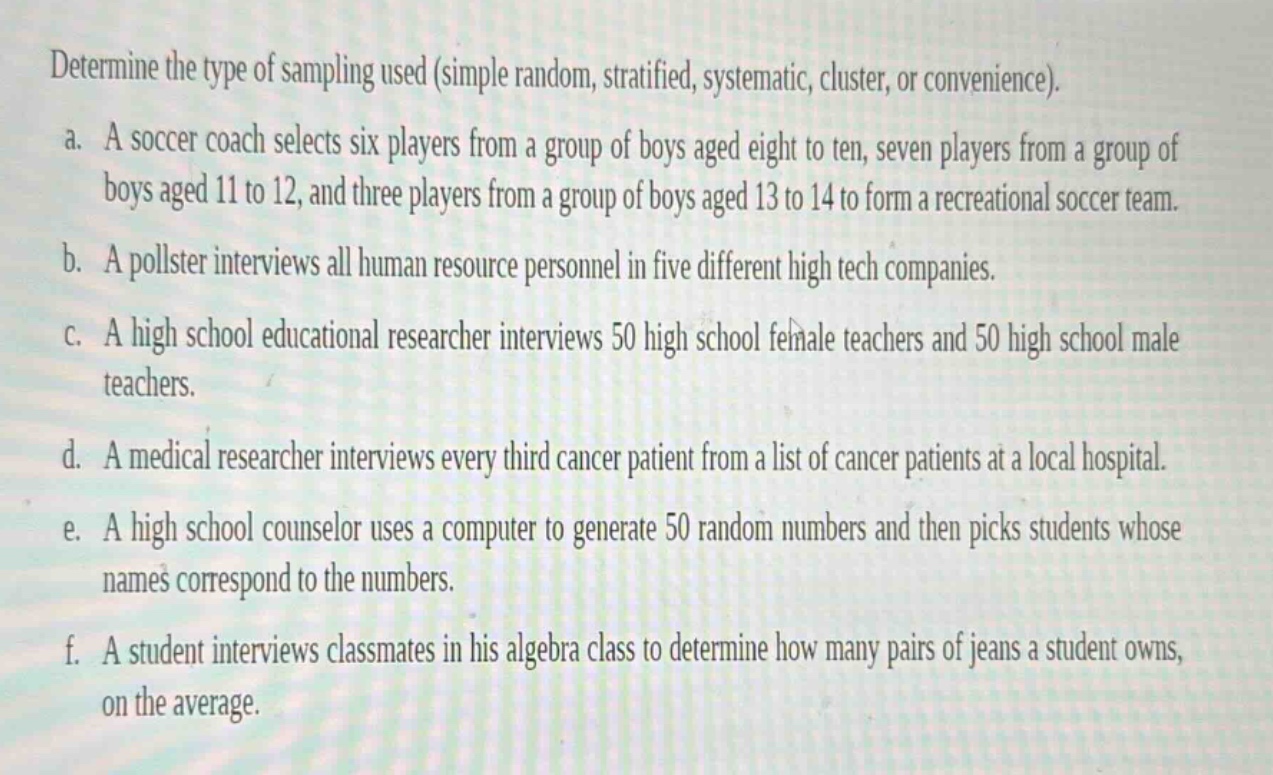
determine the type of sampling used (simple random, stratified, systematic, cluster, or convenience).\na. a soccer coach selects six players from a group of boys aged eight to ten, seven players from a group of boys aged 11 to 12, and three players from a group of boys aged 13 to 14 to form a recreational soccer team.\nb. a pollster interviews all human resource personnel in five different high - tech companies.\nc. a high school educational researcher interviews 50 high school female teachers and 50 high school male teachers.\nd. a medical researcher interviews every third cancer patient from a list of cancer patients at a local hospital.\ne. a high school counselor uses a computer to generate 50 random numbers and then picks students whose names correspond to the numbers.\nf. a student interviews classmates in his algebra class to determine how many pairs of jeans a student owns, on the average.
Answer
Brief Explanations:
- a. The coach divides the boys into age - based strata and selects players from each stratum, so it's stratified sampling.
- b. The pollster selects all HR personnel from five different companies (clusters), so it's cluster sampling.
- c. The researcher divides teachers into male and female strata and interviews an equal number from each stratum, so it's stratified sampling.
- d. Selecting every third patient from a list is systematic sampling as there is a fixed sampling interval.
- e. Using a computer to generate random numbers and picking corresponding students is simple random sampling.
- f. Interviewing classmates in an algebra class is convenience sampling as it's easy and accessible.
Answer:
a. Stratified sampling b. Cluster sampling c. Stratified sampling d. Systematic sampling e. Simple random sampling f. Convenience sampling