which heuristic refers to estimating the likelihood of an event based on how easily similar events come to…
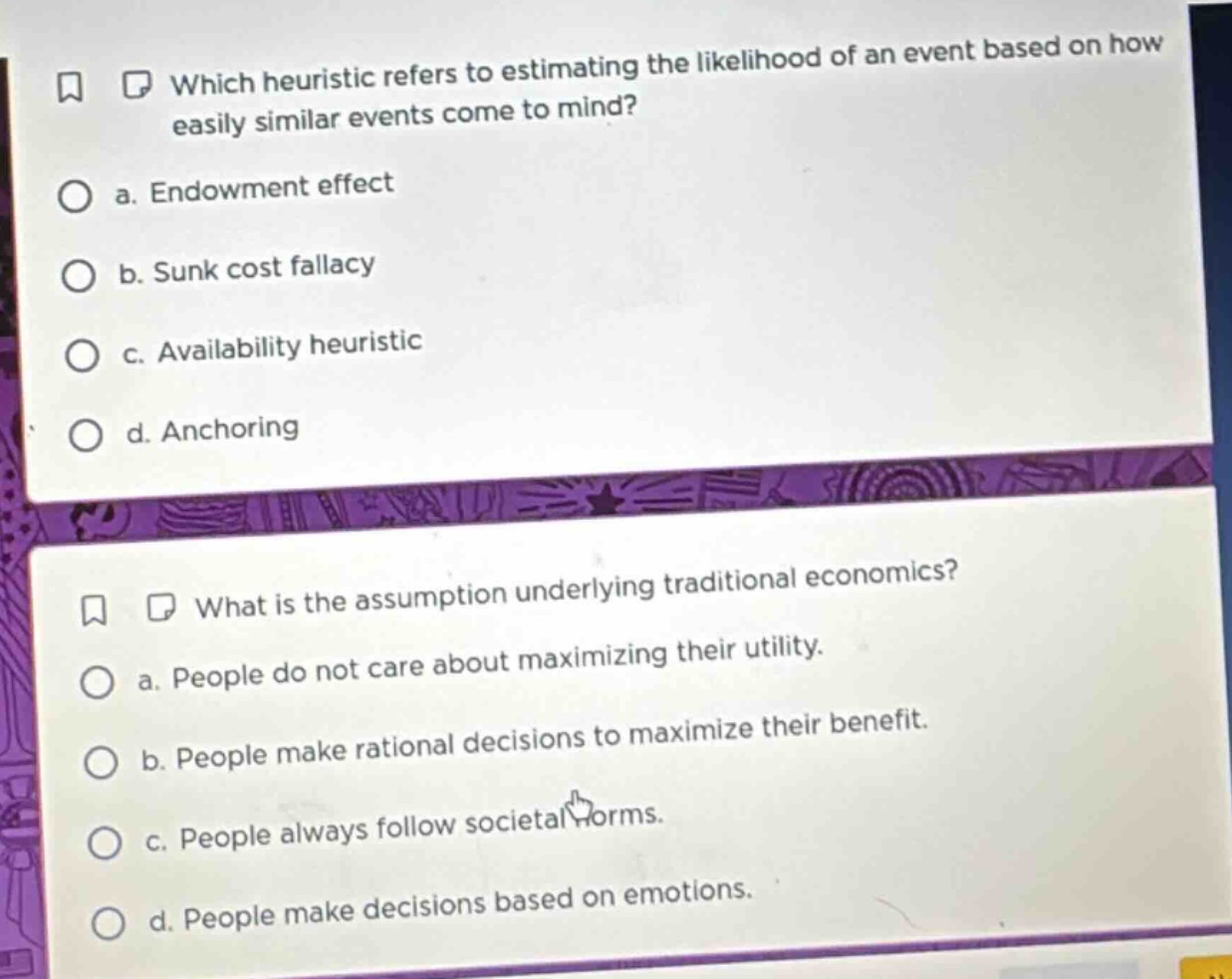
which heuristic refers to estimating the likelihood of an event based on how easily similar events come to mind?\n a. endowment effect\n b. sunk cost fallacy\n c. availability heuristic\n d. anchoring\n\nwhat is the assumption underlying traditional economics?\n a. people do not care about maximizing their utility.\n b. people make rational decisions to maximize their benefit.\n c. people always follow societal norms.\n d. people make decisions based on emotions.
Answer
Brief Explanations:
- The availability heuristic is defined as estimating the likelihood of an event based on how easily similar events come to mind. The endowment - effect is about over - valuing what one owns, the sunk - cost fallacy is about continuing an action because of past investments, and anchoring is about relying too much on an initial piece of information.
- Traditional economics assumes that people make rational decisions to maximize their benefit. It does not assume people don't care about utility maximization, that they always follow societal norms, or that they make decisions based on emotions.
Answer:
- c. Availability heuristic
- b. People make rational decisions to maximize their benefit.