introduction to fiber analysis webquest activity\nintroduction\nlocards exchange principle states that…
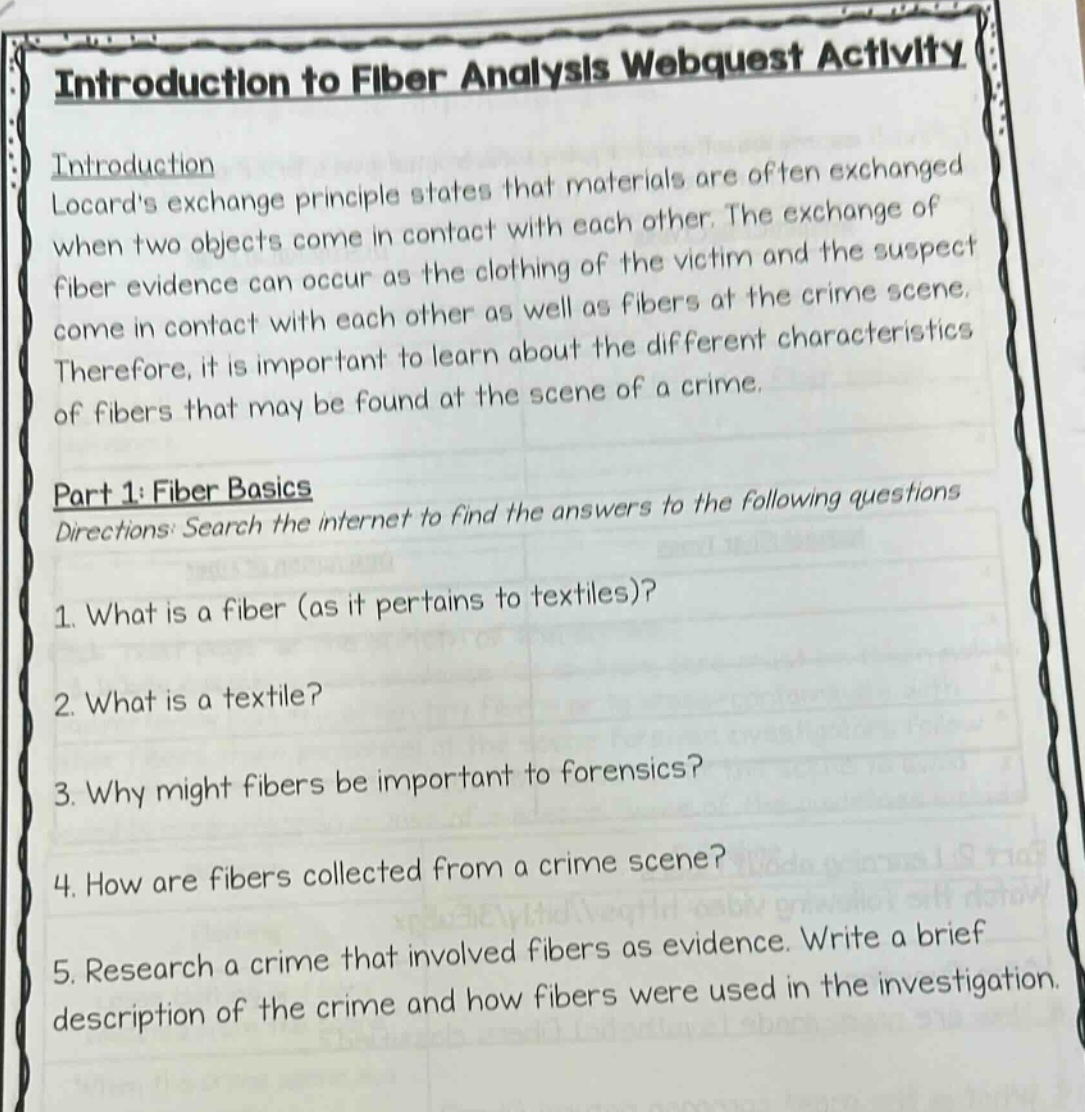
introduction to fiber analysis webquest activity\nintroduction\nlocards exchange principle states that materials are often exchanged when two objects come in contact with each other. the exchange of fiber evidence can occur as the clothing of the victim and the suspect come in contact with each other as well as fibers at the crime scene. therefore, it is important to learn about the different characteristics of fibers that may be found at the scene of a crime.\npart 1: fiber basics\ndirections: search the internet to find the answers to the following questions\n1. what is a fiber (as it pertains to textiles)?\n2. what is a textile?\n3. why might fibers be important to forensics?\n4. how are fibers collected from a crime scene?\n5. research a crime that involved fibers as evidence. write a brief description of the crime and how fibers were used in the investigation.
Answer
Brief Explanations:
- A fiber (in textiles) is a thin, thread - like strand. It can be natural (e.g., cotton, wool) or synthetic (e.g., polyester, nylon).
- A textile is a flexible material made by creating an interlacing network of fibers. This includes fabrics used for clothing, upholstery, etc.
- Fibers are important in forensics as they can be transferred between people and objects (per Locard's exchange principle), and can link suspects to victims or crime scenes. They can provide clues about the location, activities, and materials involved in a crime.
- Fibers at a crime scene are collected using methods like tweezers, tape - lifting, vacuuming with special filters to avoid damage or contamination.
- For example, in the Wayne Williams case, fibers from carpets and fabrics found on victims matched fibers from Williams' home and car, helping to convict him. Fibers were analyzed for type, color, and microscopic characteristics to establish connections.
Answer:
- A thin, thread - like strand in textiles, can be natural or synthetic.
- A flexible material made by interlacing fibers, used for clothing etc.
- They can be transferred and link suspects to victims or scenes, providing clues.
- Using tweezers, tape - lifting, vacuuming with special filters.
- In the Wayne Williams case, fibers from victims matched those from Williams' home and car. Fibers were analyzed for type, color, and microscopic features for investigation.