what is the key difference between the rules for addition and subtraction and the rules for multiplication…
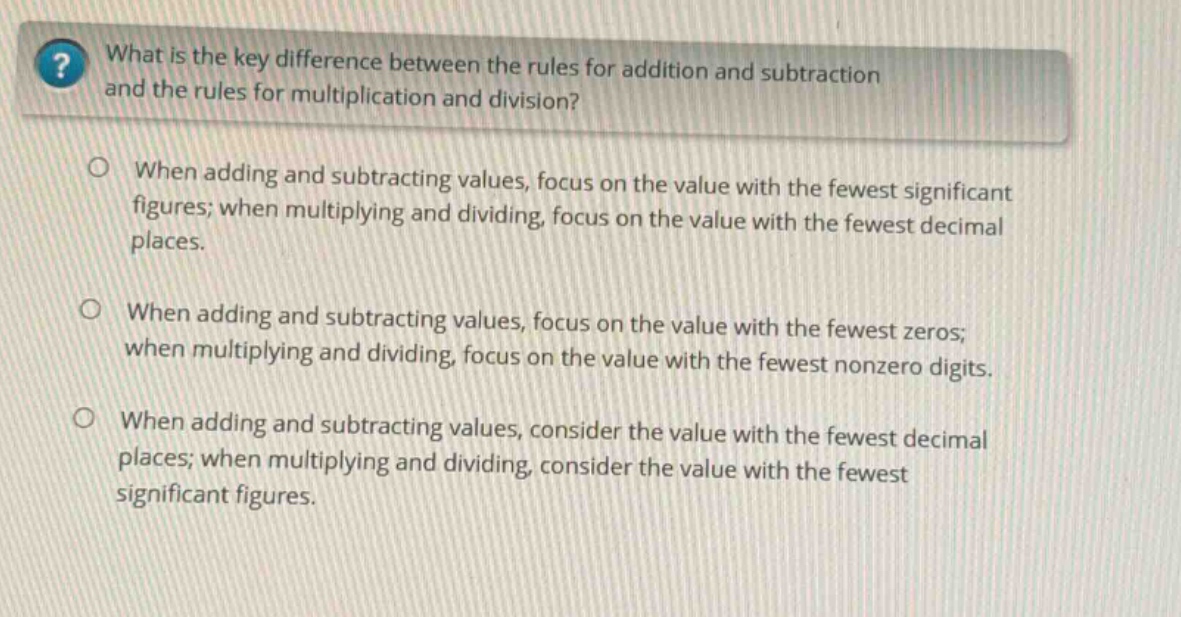
what is the key difference between the rules for addition and subtraction and the rules for multiplication and division?\nwhen adding and subtracting values, focus on the value with the fewest significant figures; when multiplying and dividing, focus on the value with the fewest decimal places.\nwhen adding and subtracting values, focus on the value with the fewest zeros; when multiplying and dividing, focus on the value with the fewest nonzero digits.\nwhen adding and subtracting values, consider the value with the fewest decimal places; when multiplying and dividing, consider the value with the fewest significant figures.
Answer
Brief Explanations:
When adding and subtracting, the result's decimal - place accuracy is determined by the number with the fewest decimal places. When multiplying and dividing, the number of significant figures in the result is determined by the number with the fewest significant figures.
Answer:
When adding and subtracting values, consider the value with the fewest decimal places; when multiplying and dividing, consider the value with the fewest significant figures.