1. use the following scenario to answer the question below about types of civic actions.\na group of workers…
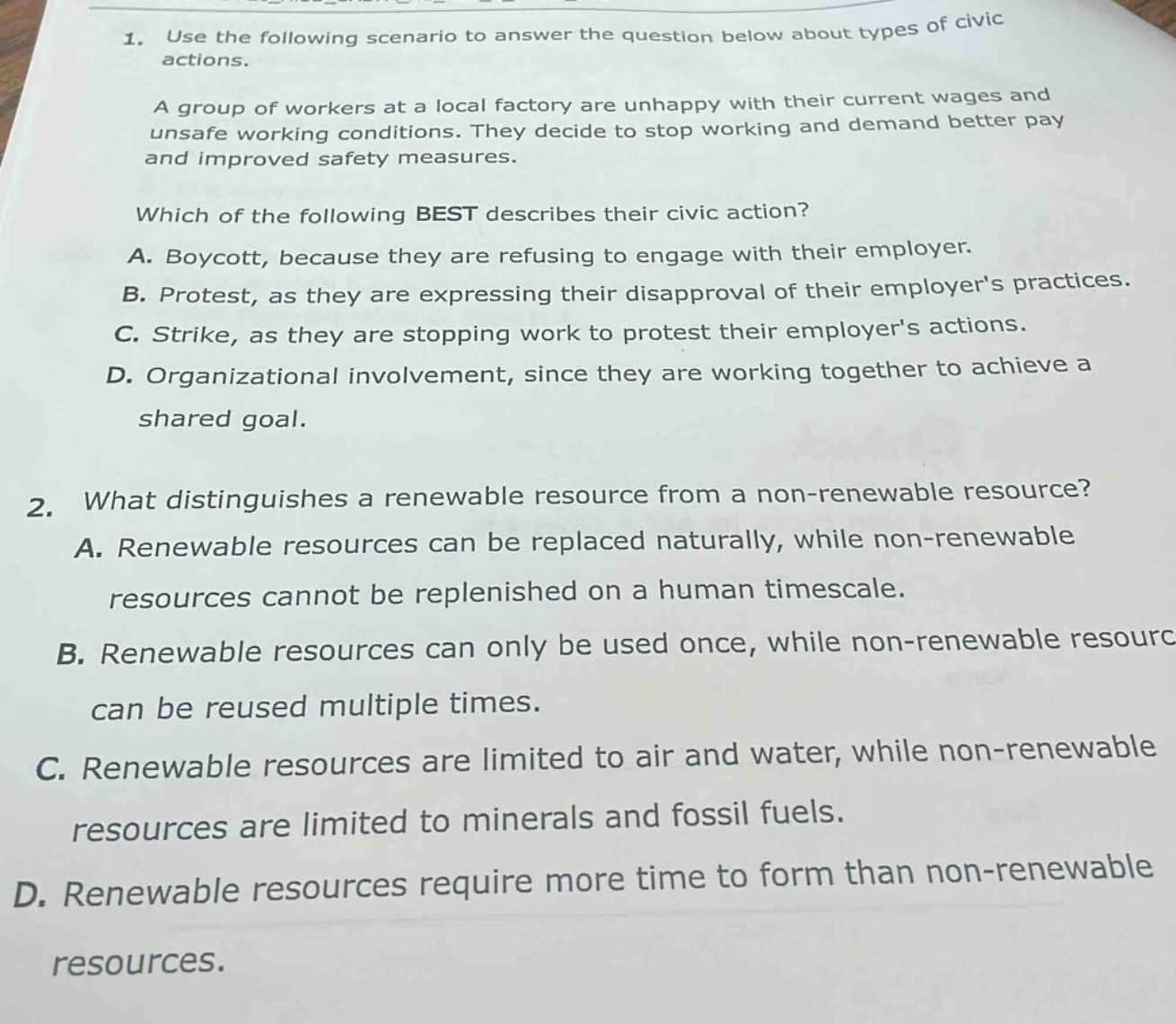
1. use the following scenario to answer the question below about types of civic actions.\na group of workers at a local factory are unhappy with their current wages and unsafe working conditions. they decide to stop working and demand better pay and improved safety measures.\nwhich of the following best describes their civic action?\na. boycott, because they are refusing to engage with their employer.\nb. protest, as they are expressing their disapproval of their employers practices.\nc. strike, as they are stopping work to protest their employers actions.\nd. organizational involvement, since they are working together to achieve a shared goal.\n2. what distinguishes a renewable resource from a non - renewable resource?\na. renewable resources can be replaced naturally, while non - renewable resources cannot be replenished on a human timescale.\nb. renewable resources can only be used once, while non - renewable resources can be reused multiple times.\nc. renewable resources are limited to air and water, while non - renewable resources are limited to minerals and fossil fuels.\nd. renewable resources require more time to form than non - renewable resources.
Answer
Brief Explanations:
- A strike is when workers stop working to protest employer - related issues like low wages and unsafe conditions, which matches the scenario. A boycott is more about not buying products or services, a protest may not involve stopping work, and organizational involvement is too general.
- Renewable resources can be naturally replenished over time, while non - renewable resources take a very long time (not on a human timescale) to form or cannot be replenished at all on a human timescale.
Answer:
- C. Strike, as they are stopping work to protest their employer's actions.
- A. Renewable resources can be replaced naturally, while non - renewable resources cannot be replenished on a human timescale.