in 1971, a physicist named gabor received the nobel prize for developing the basic ideas of holography, a…
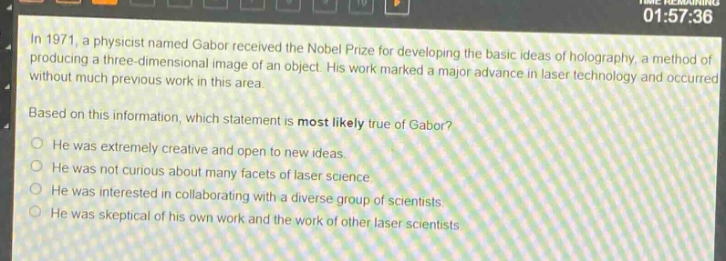
in 1971, a physicist named gabor received the nobel prize for developing the basic ideas of holography, a method of producing a three - dimensional image of an object. his work marked a major advance in laser technology and occurred without much previous work in this area. based on this information, which statement is most likely true of gabor? he was extremely creative and open to new ideas. he was not curious about many facets of laser science. he was interested in collaborating with a diverse group of scientists. he was skeptical of his own work and the work of other laser scientists.
Answer
Answer:
He was extremely creative and open to new ideas.
Brief Explanations:
Gabor developed holography with little prior work, showing creativity and openness to new concepts.