aluminum has a frequency threshold of 9.846×10¹⁴ hz. which best explains what will happen when light with a…
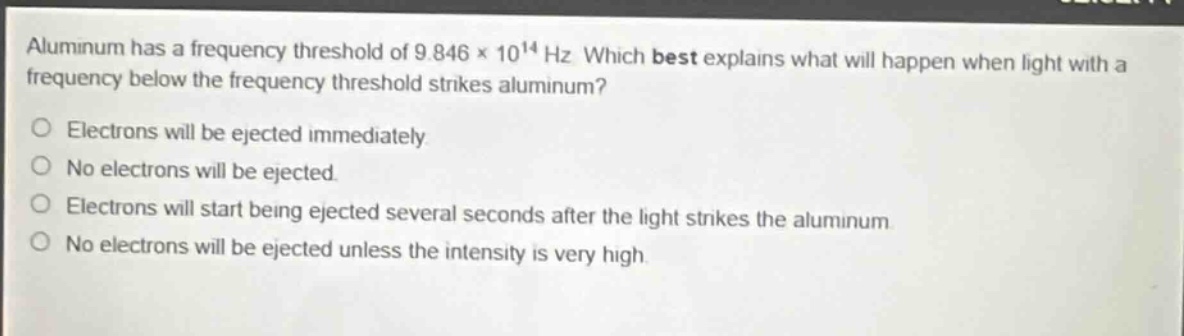
aluminum has a frequency threshold of 9.846×10¹⁴ hz. which best explains what will happen when light with a frequency below the frequency threshold strikes aluminum?\nelectrons will be ejected immediately.\nno electrons will be ejected.\nelectrons will start being ejected several seconds after the light strikes the aluminum.\nno electrons will be ejected unless the intensity is very high.
Answer
Brief Explanations:
According to the photoelectric - effect principle, for electrons to be ejected from a metal surface, the frequency of the incident light must be at least equal to the metal's frequency threshold. If the frequency of the incident light is below the threshold, no electrons will be ejected regardless of the light intensity.
Answer:
No electrons will be ejected.