which best describes a difference between energy transformations in power plants and dams?\n\nonly power…
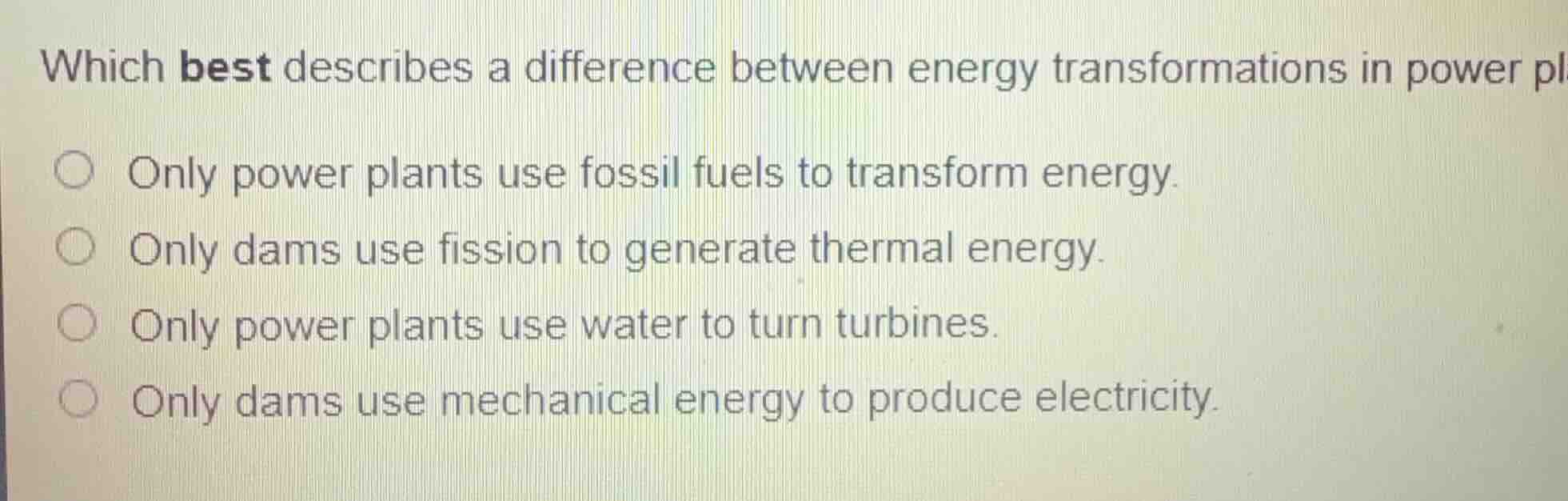
which best describes a difference between energy transformations in power plants and dams?\n\nonly power plants use fossil fuels to transform energy.\nonly dams use fission to generate thermal energy.\nonly power plants use water to turn turbines.\nonly dams use mechanical energy to produce electricity.
Answer
Brief Explanations:
The question asks for a difference in energy transformations between power plants (typically referring to thermal power plants like fossil fuel or nuclear) and hydroelectric dams.
- Fossil fuels are used in thermal power plants, but not in dams. However, other machines (like cars) also use fossil fuels, making the "only" part of the first statement potentially misleading depending on context, but in the context of large-scale grid generation, it is a primary distinction.
- Dams do not use nuclear fission; nuclear power plants do.
- Both thermal power plants (using steam) and dams (using flowing water) use water to turn turbines.
- Both types of facilities convert mechanical energy (rotation of a turbine) into electricity via a generator.
Comparing the options, the most accurate distinction regarding the source of energy transformation is that fossil fuels are characteristic of thermal power plants and are not used by hydroelectric dams.
Answer:
Only power plants use fossil fuels to transform energy.