which best explains how the collisions of materials in space contribute to the formation of layers in…
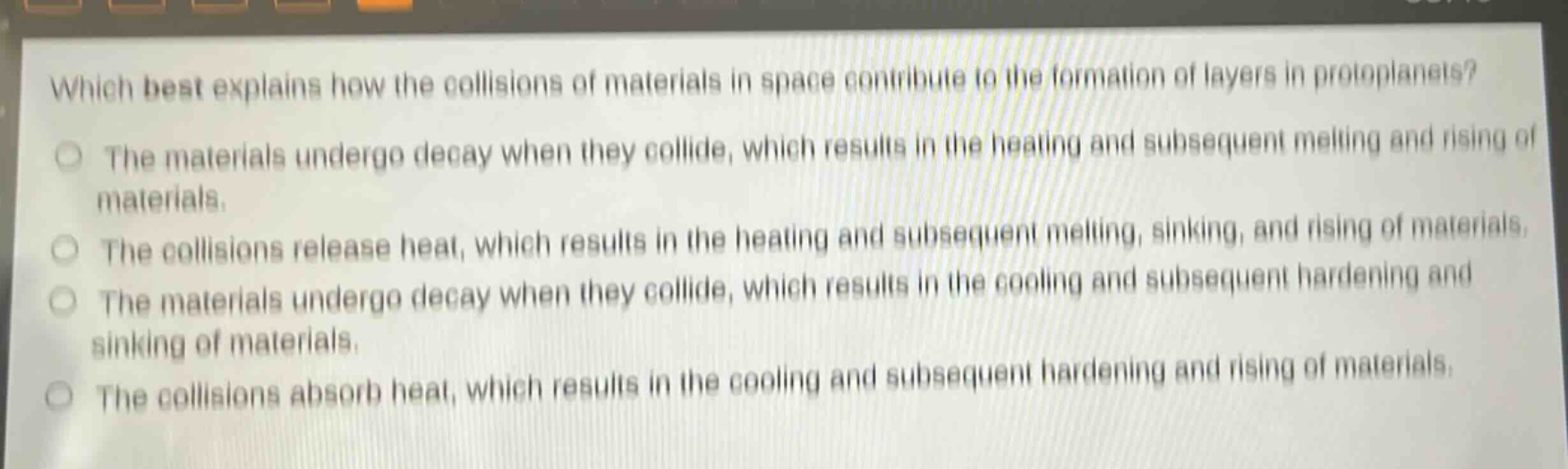
which best explains how the collisions of materials in space contribute to the formation of layers in protoplanets? the materials undergo decay when they collide, which results in the heating and subsequent melting and rising of materials. the collisions release heat, which results in the heating and subsequent melting, sinking, and rising of materials. the materials undergo decay when they collide, which results in the cooling and subsequent hardening and sinking of materials. the collisions absorb heat, which results in the cooling and subsequent hardening and rising of materials.
Answer
Brief Explanations:
When materials in space collide during protoplanet - formation, the collisions release heat. This heat causes the materials to heat up, melt, and due to density differences, some materials sink while others rise, leading to layer formation. Decay is not the main process here, and collisions release rather than absorb heat.
Answer:
The collisions release heat, which results in the heating and subsequent melting, sinking, and rising of materials.