which best explains how gravity contributes to the formation of layers in protoplanets? gravity attracts…
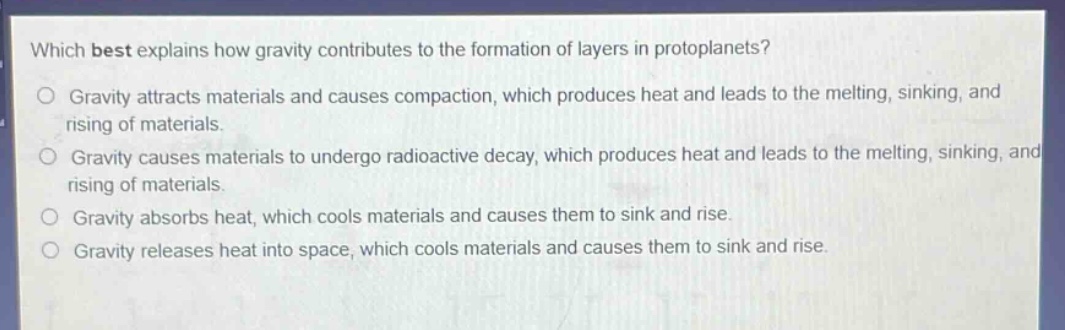
which best explains how gravity contributes to the formation of layers in protoplanets? gravity attracts materials and causes compaction, which produces heat and leads to the melting, sinking, and rising of materials. gravity causes materials to undergo radioactive decay, which produces heat and leads to the melting, sinking, and rising of materials. gravity absorbs heat, which cools materials and causes them to sink and rise. gravity releases heat into space, which cools materials and causes them to sink and rise.
Answer
Brief Explanations:
Gravity pulls materials together causing compaction. Compaction generates heat, leading to melting. Denser melted - materials sink and less - dense ones rise, forming layers in protoplanets. Radioactive decay is not directly caused by gravity. Gravity doesn't absorb or release heat in the ways described in the other options.
Answer:
Gravity attracts materials and causes compaction, which produces heat and leads to the melting, sinking, and rising of materials.