data analysis - answer the questions using the table. a student pulls a crate along a smooth surface and…
data analysis - answer the questions using the table. a student pulls a crate along a smooth surface and records the motion data. the data is represented in the graph below. 6. describe the motion of the crate during the first 3 seconds. 7. describe the motion of the crate between 3 and 7 seconds. 8. during which time interval does the crate move the fastest? 9. create a story that depicts the motion on the graph.
Answer
Explanation:
Step1: Analizar el primer tramo (0 - 3 segundos)
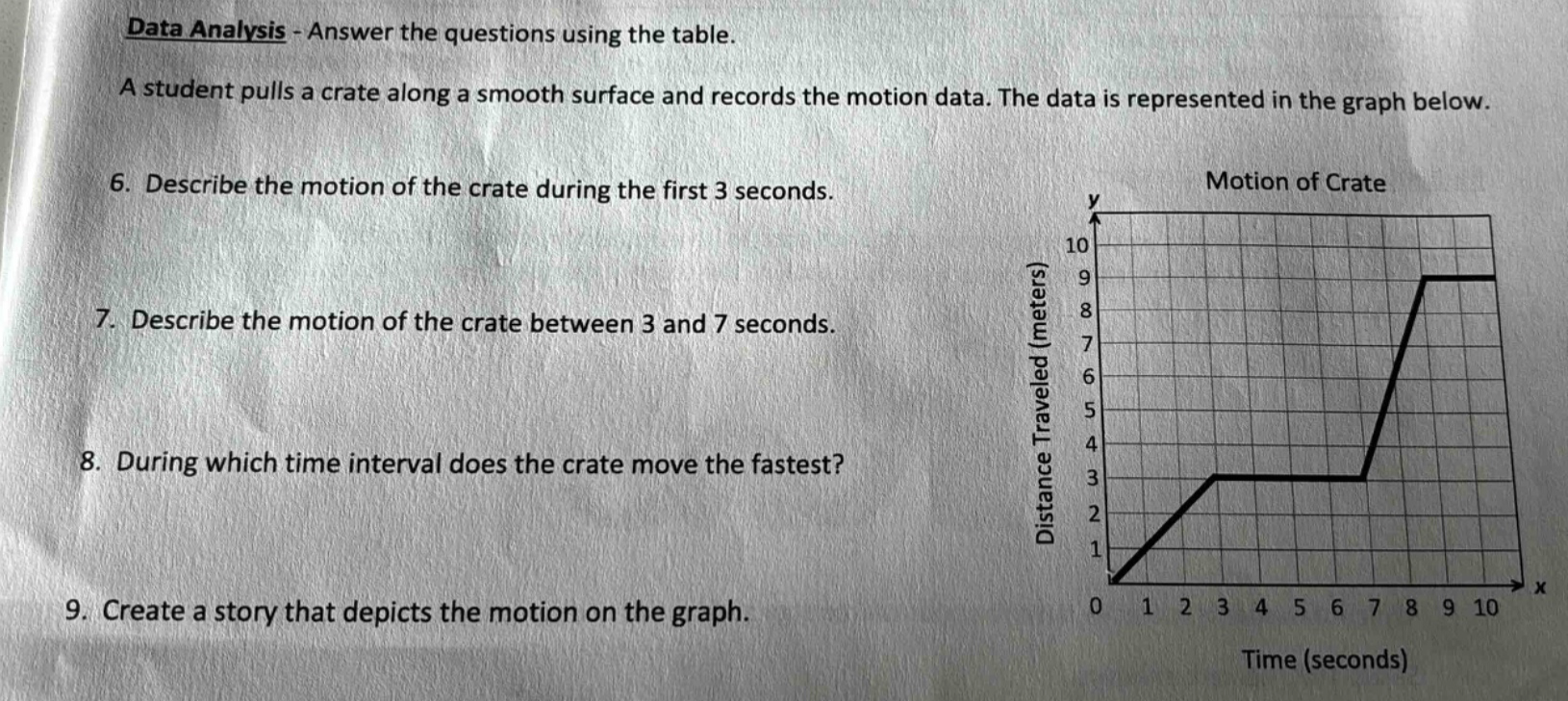
En el intervalo de 0 a 3 segundos, la distancia recorrida aumenta linealmente. La pendiente de la recta en este intervalo es constante. Esto significa que la velocidad es constante.
Step2: Analizar el segundo tramo (3 - 7 segundos)
Entre 3 y 7 segundos, la distancia recorrida no cambia. La gráfica es una línea horizontal. Esto significa que el objeto está en reposo.
Step3: Determinar el intervalo de mayor velocidad
La velocidad está dada por la pendiente de la gráfica de distancia - tiempo. La pendiente es mayor en el intervalo de 7 a 9 segundos, ya que la distancia aumenta más rápidamente en este intervalo.
Step4: Crear una historia
Un estudiante está jugando en un patio. Empieza a arrastrar una caja suavemente. Durante los primeros 3 segundos, arrastra la caja a una velocidad constante hacia adelante. Luego, se detiene a descansar entre los 3 y los 7 segundos. Después, decide correr con la caja y la arrastra muy rápido entre los 7 y los 9 segundos. Finalmente, se detiene y deja la caja en el suelo a los 9 segundos.
Answer:
- El crate se mueve a velocidad constante.
- El crate está en reposo.
- Entre 7 y 9 segundos.
- Un estudiante está jugando en un patio. Empieza a arrastrar una caja suavemente. Durante los primeros 3 segundos, arrastra la caja a una velocidad constante hacia adelante. Luego, se detiene a descansar entre los 3 y los 7 segundos. Después, decide correr con la caja y la arrastra muy rápido entre los 7 y los 9 segundos. Finalmente, se detiene y deja la caja en el suelo a los 9 segundos.