the diagram below shows the shadow cast by earth at one point during the year. an observer is located on…
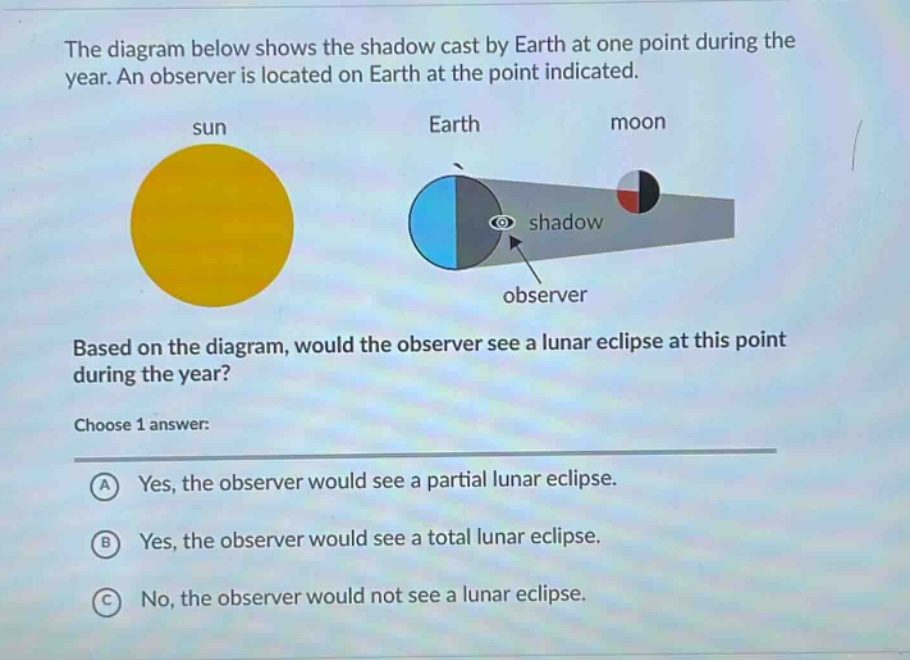
the diagram below shows the shadow cast by earth at one point during the year. an observer is located on earth at the point indicated. based on the diagram, would the observer see a lunar eclipse at this point during the year? choose 1 answer: a yes, the observer would see a partial lunar eclipse. b yes, the observer would see a total lunar eclipse. c no, the observer would not see a lunar eclipse.
Answer
Brief Explanations:
For a lunar eclipse to occur, the Earth must be between the sun and the moon, and the moon must pass through Earth's shadow. In the diagram, the observer is within Earth's shadow, but the moon is outside the part of Earth's shadow that causes a lunar - eclipse. The moon needs to be in Earth's umbra or penumbra as seen from the perspective of an observer on Earth for a lunar eclipse to be visible. Here, the moon is not in the relevant part of the shadow for the observer to see a lunar eclipse.
Answer:
C. No, the observer would not see a lunar eclipse.