drag each tile to the correct box. match the storage devices to their properties. solid - state storage…
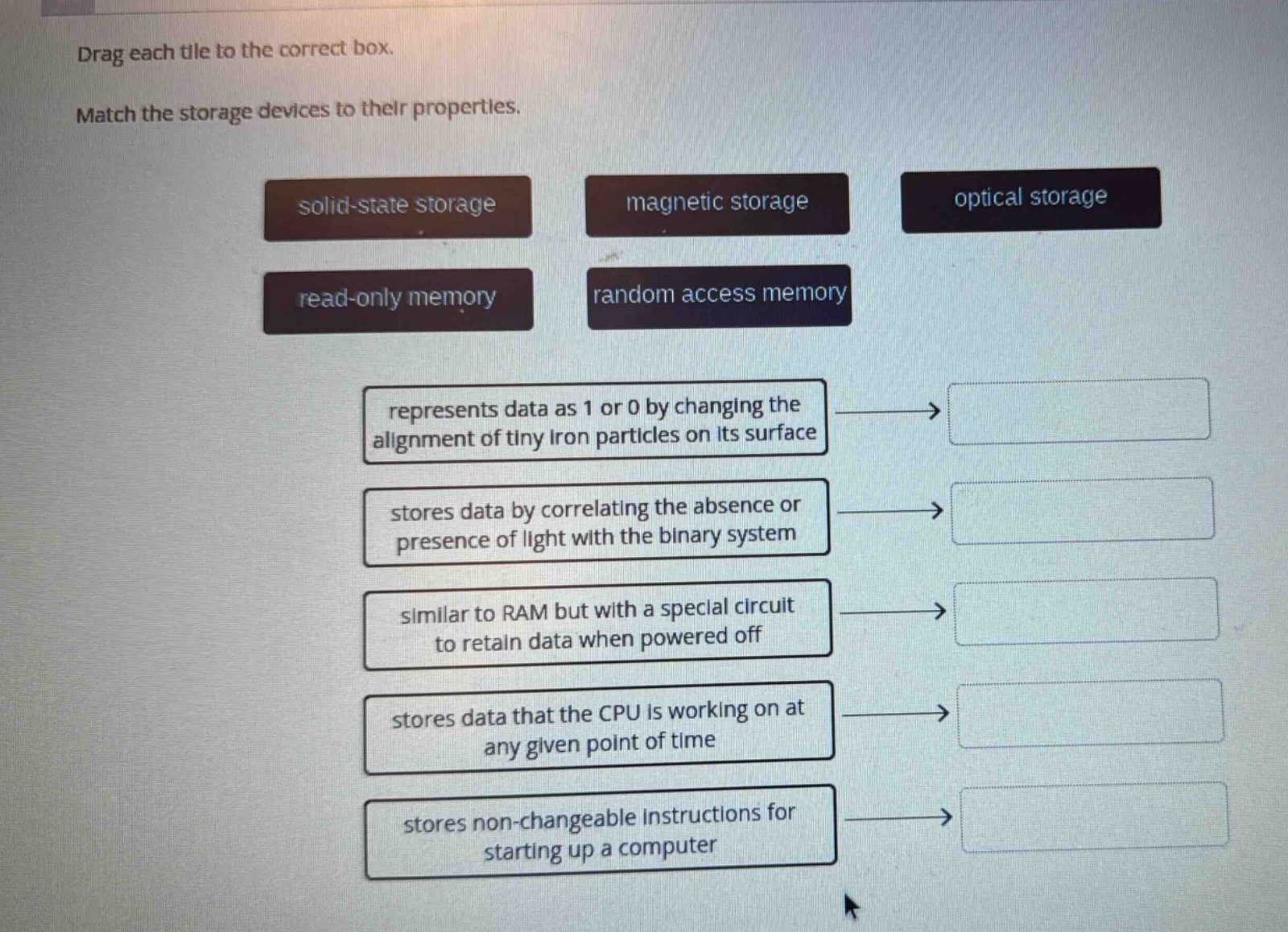
drag each tile to the correct box. match the storage devices to their properties. solid - state storage magnetic storage optical storage read - only memory random access memory represents data as 1 or 0 by changing the alignment of tiny iron particles on its surface stores data by correlating the absence or presence of light with the binary system similar to ram but with a special circuit to retain data when powered off stores data that the cpu is working on at any given point of time stores non - changeable instructions for starting up a computer
Answer
Brief Explanations:
- Magnetic storage represents data as 1 or 0 by changing the alignment of tiny iron particles on its surface.
- Optical storage stores data by correlating the absence or presence of light with the binary system.
- Solid - state storage is similar to RAM but with a special circuit to retain data when powered off.
- Random access memory stores data that the CPU is working on at any given point of time.
- Read - only memory stores non - changeable instructions for starting up a computer.
Answer:
- represents data as 1 or 0 by changing the alignment of tiny iron particles on its surface → magnetic storage
- stores data by correlating the absence or presence of light with the binary system → optical storage
- similar to RAM but with a special circuit to retain data when powered off → solid - state storage
- stores data that the CPU is working on at any given point of time → random access memory
- stores non - changeable instructions for starting up a computer → read - only memory