an electron in a hydrogen atom moves from level 1 to level 4. the electron then drops from level 4 to level…
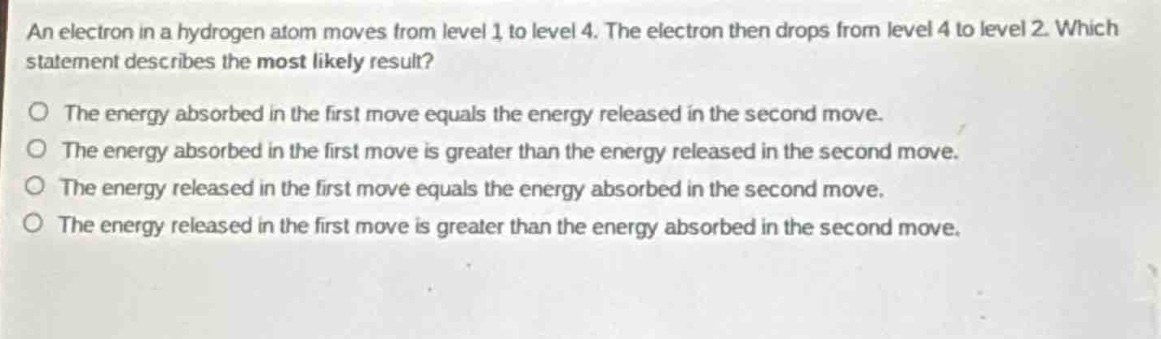
an electron in a hydrogen atom moves from level 1 to level 4. the electron then drops from level 4 to level 2. which statement describes the most likely result?\no the energy absorbed in the first move equals the energy released in the second move.\no the energy absorbed in the first move is greater than the energy released in the second move.\no the energy released in the first move equals the energy absorbed in the second move.\no the energy released in the first move is greater than the energy absorbed in the second move.
Answer
Brief Explanations:
When an electron moves from a lower energy level (level 1) to a higher energy level (level 4) in a hydrogen - atom, it absorbs energy. The energy difference between level 1 and level 4 is larger than the energy difference between level 4 and level 2. When the electron drops from level 4 to level 2, it releases energy. So, the energy absorbed in moving from level 1 to level 4 is greater than the energy released in moving from level 4 to level 2.
Answer:
The energy absorbed in the first move is greater than the energy released in the second move.