evidence, data, and conclusions\nmotion of objects traveling down a ramp\nmass (g) trial 1 time (s) trial 2…
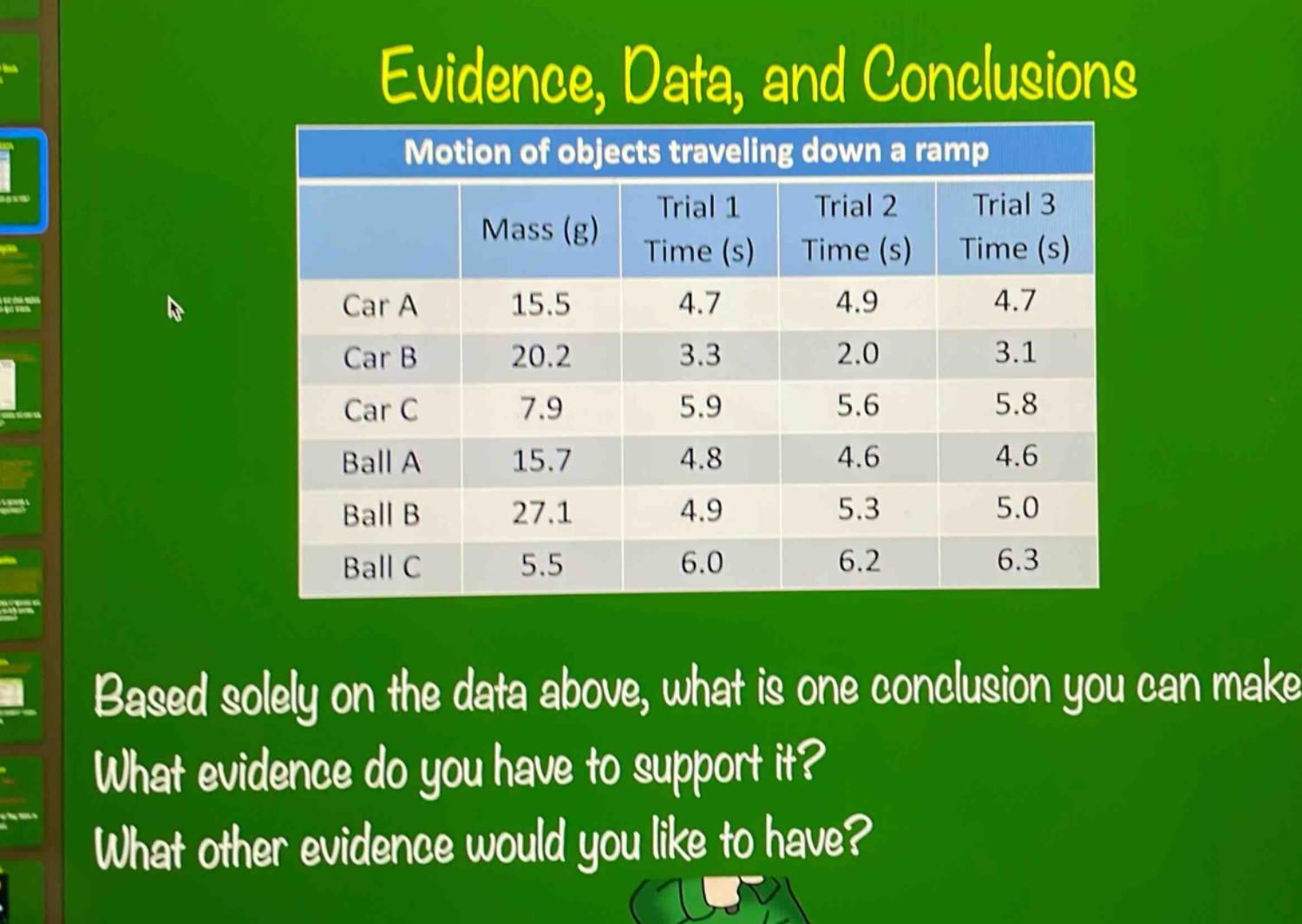
evidence, data, and conclusions\nmotion of objects traveling down a ramp\nmass (g) trial 1 time (s) trial 2 time (s) trial 3 time (s)\ncar a 15.5 4.7 4.9 4.7\ncar b 20.2 3.3 2.0 3.1\ncar c 7.9 5.9 5.6 5.8\nball a 15.7 4.8 4.6 4.6\nball b 27.1 4.9 5.3 5.0\nball c 5.5 6.0 6.2 6.3\nbased solely on the data above, what is one conclusion you can make? what evidence do you have to support it? what other evidence would you like to have?
Answer
Brief Explanations:
- Conclusion: Heavier objects do not always travel down the ramp faster. For example, Car B (20.2 g) has inconsistent times compared to Car A (15.5 g) and other objects, showing no clear - mass - speed relationship.
- Evidence: Car B with a relatively high mass has a wide range of times (2.0 s to 3.3 s) and is not consistently faster than lighter objects like Car A. Ball B (27.1 g) also doesn't have significantly faster times than lighter balls.
- Desired evidence: Information about the shape and surface texture of the objects, as well as the angle and friction of the ramp, which could affect the motion and times.
Answer:
Conclusion: Heavier objects do not always travel down the ramp faster. Evidence: Car B with a relatively high mass has inconsistent times and is not consistently faster than lighter objects. Desired evidence: Information about object shape, surface texture, ramp angle and friction.