which of the following is true of both nuclear fusion and nuclear fission? a. they both require a high…
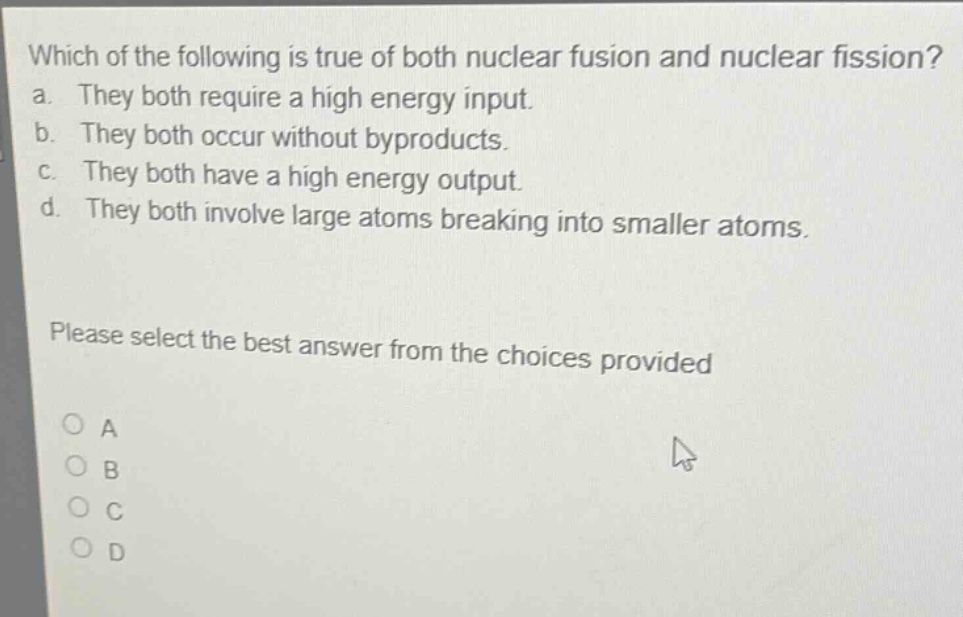
which of the following is true of both nuclear fusion and nuclear fission? a. they both require a high energy input. b. they both occur without byproducts. c. they both have a high energy output. d. they both involve large atoms breaking into smaller atoms. please select the best answer from the choices provided
Answer
Brief Explanations:
- Nuclear fusion: It combines light - weight nuclei to form a heavier nucleus, releasing a large amount of energy. It requires high temperatures and pressures (high - energy input initially to overcome electrostatic repulsion between nuclei), but overall has a high energy output.
- Nuclear fission: It splits a heavy - weight nucleus into two or more lighter nuclei, also releasing a large amount of energy. It can be initiated by neutron bombardment and has a high energy output.
- Analysis of options:
- Option a: Fusion requires high energy input, but fission can be initiated with a neutron and doesn't always require extremely high energy input like fusion.
- Option b: Both fusion and fission have by - products. For example, in fission, radioactive by - products are often produced.
- Option c: Both processes release a large amount of energy, so they have a high energy output.
- Option d: Only fission involves large atoms breaking into smaller atoms; fusion combines small atoms.
Answer:
C. They both have a high energy output.