if both gases are at the same temperature, which one has the greater pressure? gas 1 because the particles…
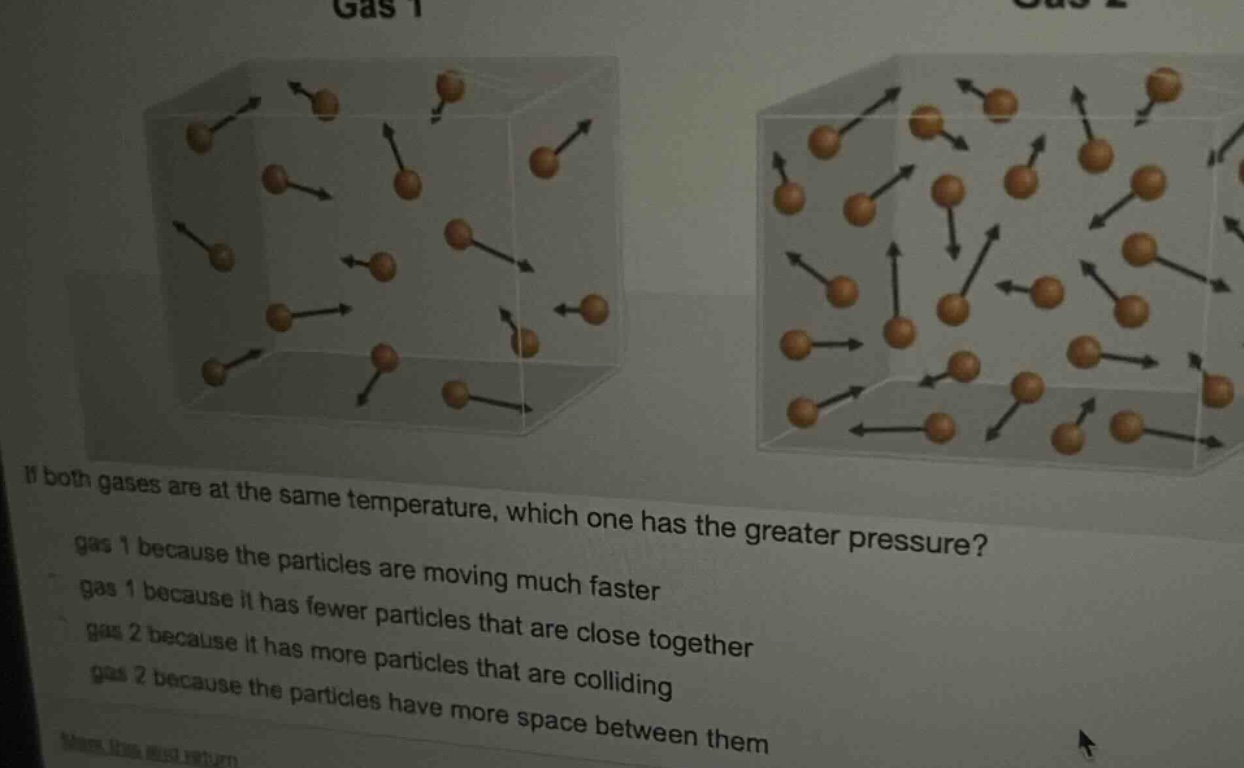
if both gases are at the same temperature, which one has the greater pressure? gas 1 because the particles are moving much faster gas 1 because it has fewer particles that are close together gas 2 because it has more particles that are colliding gas 2 because the particles have more space between them
Answer
Brief Explanations:
Gas pressure is determined by the frequency and force of collisions of gas particles with the container walls. According to the Ideal Gas Law ($PV = nRT$), pressure ($P$) is directly proportional to the number of moles ($n$) of gas particles when volume ($V$) and temperature ($T$) are constant ($R$ is the ideal gas constant). The image shows two containers of the same volume. Both gases are at the same temperature, meaning the average kinetic energy (and roughly the average speed) of the particles is the same in both containers. Gas 2 contains significantly more particles than Gas 1. Therefore, there will be more collisions per unit time with the walls in Gas 2 compared to Gas 1, resulting in a greater pressure.
Answer:
gas 2 because it has more particles that are colliding