jeremiah is studying wave a and wave b. wave a is traveling at 3 hertz, and wave b is traveling at 1.2…
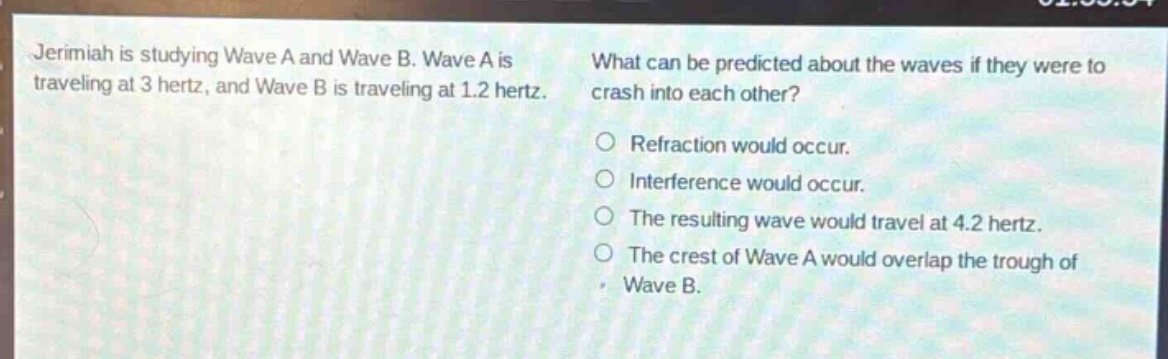
jeremiah is studying wave a and wave b. wave a is traveling at 3 hertz, and wave b is traveling at 1.2 hertz. what can be predicted about the waves if they were to crash into each other? refraction would occur. interference would occur. the resulting wave would travel at 4.2 hertz. the crest of wave a would overlap the trough of wave b.
Answer
Answer:
B. Interference would occur.
Explanation:
Step1: Recall wave - interaction concepts
When two waves meet, interference occurs.
Step2: Analyze other options
Refraction is bending of waves due to medium change, not wave - wave collision. Frequency of a combined wave is not sum of individual frequencies in simple collision. There is no information to suggest crest of A will overlap trough of B specifically. Interference is the general phenomenon when waves crash into each other.