keesha conducts an experiment by pouring equal amounts of boiling water into four containers. the containers…
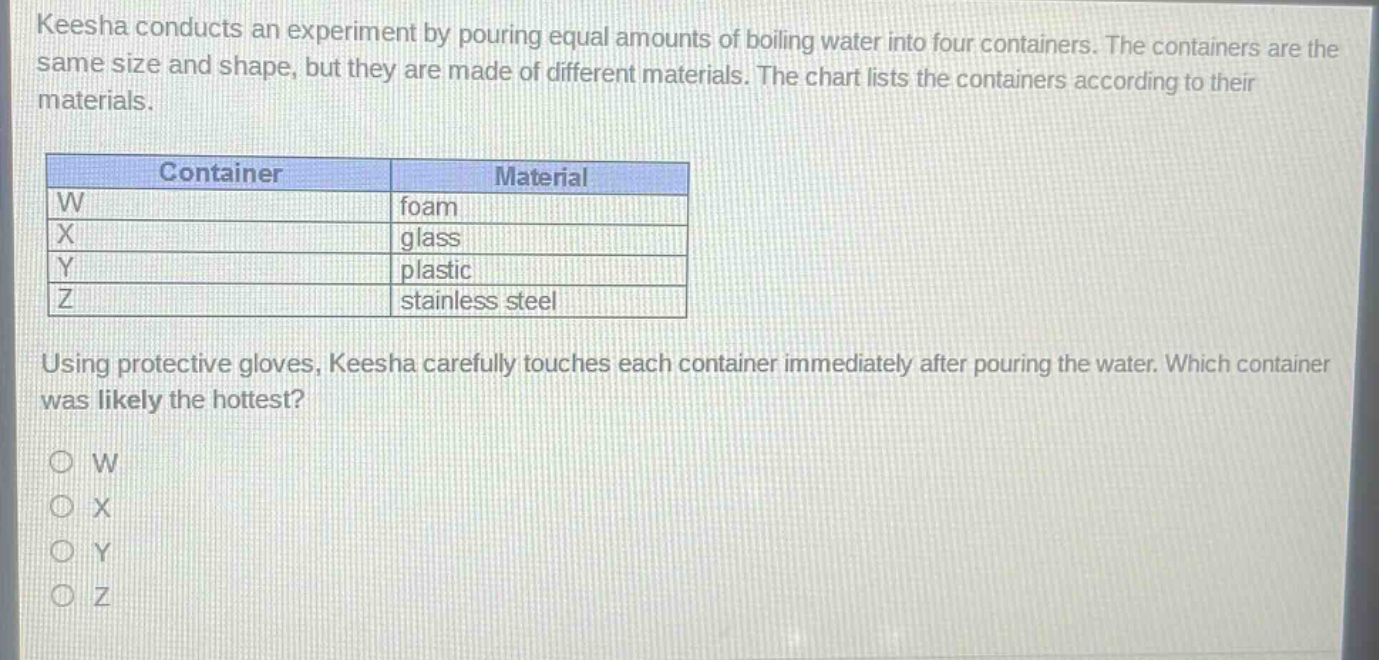
keesha conducts an experiment by pouring equal amounts of boiling water into four containers. the containers are the same size and shape, but they are made of different materials. the chart lists the containers according to their materials.\n\n| container | material |\n| ---- | ---- |\n| w | foam |\n| x | glass |\n| y | plastic |\n| z | stainless steel |\n\nusing protective gloves, keesha carefully touches each container immediately after pouring the water. which container was likely the hottest?\no w\no x\no y\no z
Answer
Answer:
D. Z
Explanation:
Step1: Recall heat - conduction property
Materials have different heat - conduction abilities.
Step2: Identify heat - conductors and insulators
Foam, glass, and plastic are poor heat - conductors (insulators). Stainless steel is a good heat - conductor.
Step3: Determine the hottest container
Since stainless steel (container Z) conducts heat well, heat from the boiling water will transfer to the surface more readily, making it the hottest to touch.