the largest structures in the universe are called superclusters. superclusters are collections of galaxy…
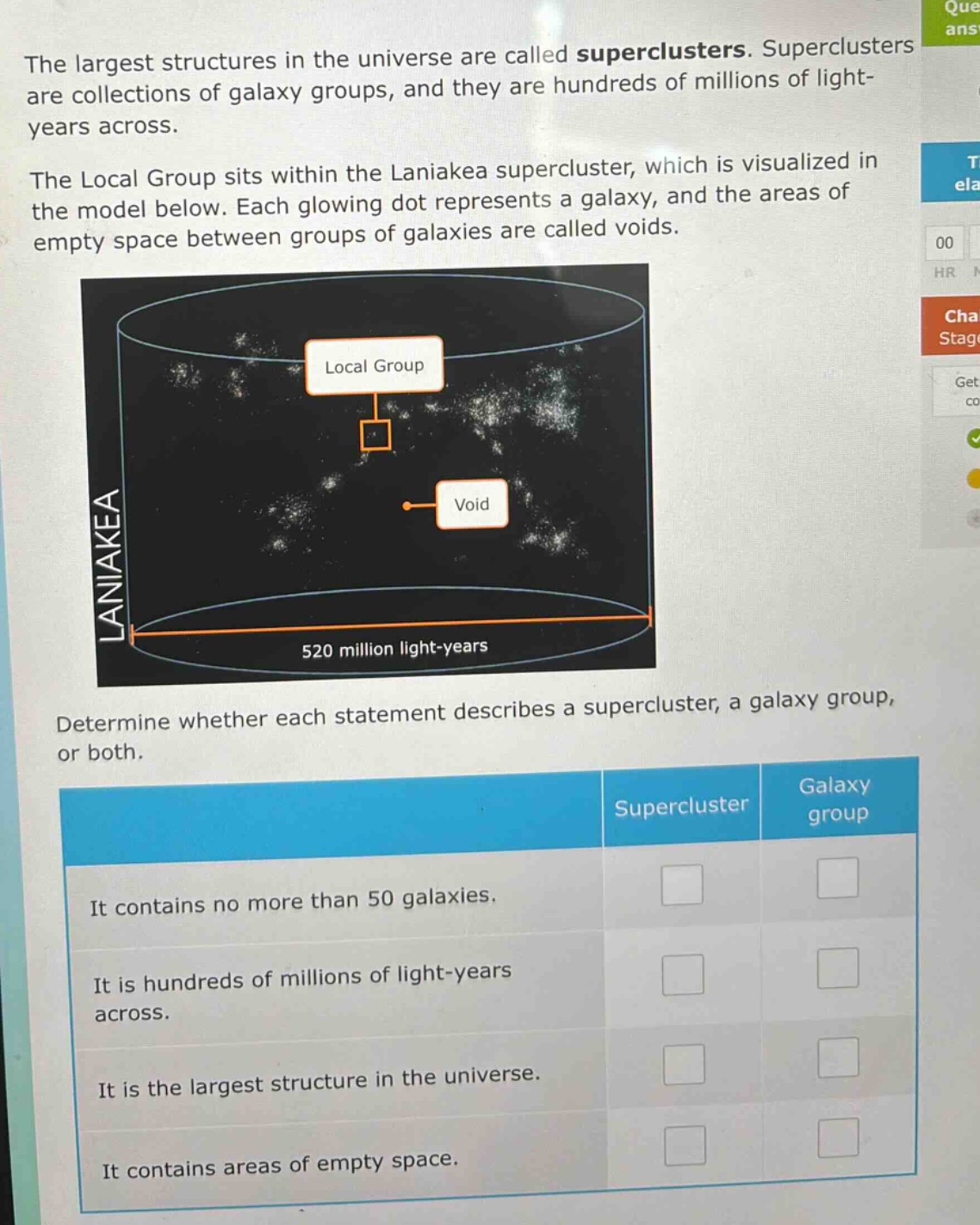
the largest structures in the universe are called superclusters. superclusters are collections of galaxy groups, and they are hundreds of millions of light - years across. the local group sits within the laniakea supercluster, which is visualized in the model below. each glowing dot represents a galaxy, and the areas of empty space between groups of galaxies are called voids. determine whether each statement describes a supercluster, a galaxy group, or both. it contains no more than 50 galaxies. it is hundreds of millions of light - years across. it is the largest structure in the universe. it contains areas of empty space.
Answer
Brief Explanations:
- Galaxy groups typically contain up to 50 galaxies. Super - clusters are much larger collections of galaxy groups. So "It contains no more than 50 galaxies." describes a galaxy group.
- Super - clusters are hundreds of millions of light - years across, while galaxy groups are much smaller in scale. So "It is hundreds of millions of light - years across." describes a supercluster.
- Super - clusters are the largest structures in the universe, not galaxy groups. So "It is the largest structure in the universe." describes a supercluster.
- Both super - clusters (which have voids between galaxy groups) and galaxy groups (which can have empty space between individual galaxies) can contain areas of empty space. So "It contains areas of empty space." describes both.
Answer:
- Galaxy group
- Supercluster
- Supercluster
- Both