when light from one source, x, strikes a metal, electrons are ejected. when light from another source, y…
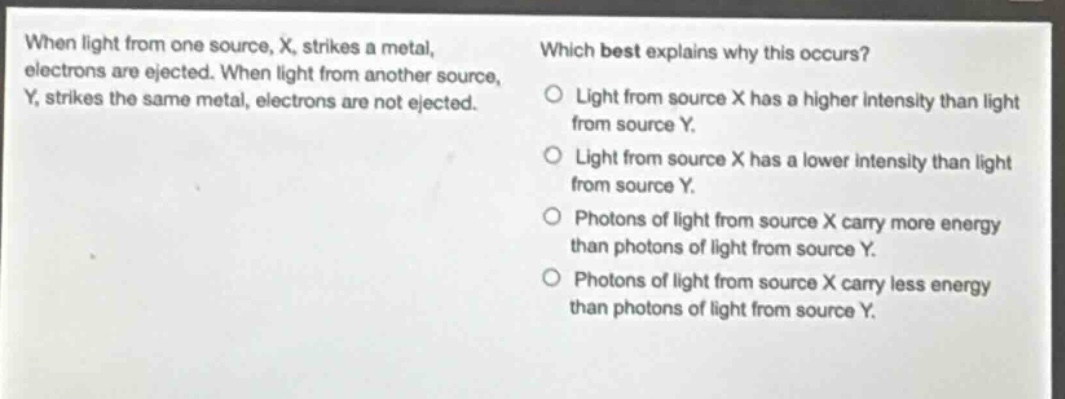
when light from one source, x, strikes a metal, electrons are ejected. when light from another source, y, strikes the same metal, electrons are not ejected. which best explains why this occurs? light from source x has a higher intensity than light from source y. light from source x has a lower intensity than light from source y. photons of light from source x carry more energy than photons of light from source y. photons of light from source x carry less energy than photons of light from source y.
Answer
Brief Explanations:
The photoelectric effect states that electrons are ejected from a metal when photons with sufficient energy strike it. The energy of a photon is related to its frequency (not intensity). If light from source X ejects electrons and light from source Y does not, it means photons from source X have more energy than those from source Y.
Answer:
Photons of light from source X carry more energy than photons of light from source Y.